Terrorist groups like Al Qaeda (AQ) or the Islamic State (IS) have been pro-active in using the internet as well as traditional media formats to maintain a persistent media presence with the intention to influence their target audiences. For that purpose, they project influence based on a coherent – and thus for its target audience – credible framework. The coherent interpretation of the legacy of classical Islamic scholarship (theology, jurisprudence, and science of the Qur’an and hadith) draws on various contemporary Islamic scholars and laymen. Yet its most prominent feature is that it is embedded in medieval Salafi theology, by means of which contemporary political agenda is legitimized.
AQ has been a pioneer both in terms of bringing the fight into the field and mediatizing the fight as well as coherently explaining why to fight – and what for – to a global audience since the 1980s. AQ’s boots on the ground in Afghanistan in the 1980s meant not only an organized force to combat the occupying Red Army but also to establish – and maintain – a coherent and persistent media output.
Based on the evidence of materials collected within jihadi online networks, the Caliphate Library is a good sample of what type of writings matter to such Sunni extremist movements. The Caliphate Library is a text-only curated dataset that was set up by IS and shared within Telegram and is therefore the expression of the most modern means of communication.
The Library was curated for initiated sympathizers and an Arabic speaking audience who are aware of religious elements and who – not necessarily are first and foremost interested in IS-writings. Conveying a large dataset of theological writings electronically with the possibility of re-establishing the mechanisms to re-share this dataset in case of deletion or network disruption, is what lies at the heart of „Cyberia.“
By taking a closer look at the ISIS-Library, Ali Fisher, Nico Prucha and Pavel Ťupek meticulously examine how theological writings are appropriated and presented in modern communication networks of Islamist terrorist groups.
Understanding the Global Jihadist Movement 20 years after 9/11
Dr. Ali Fisher, Dr. Nico Prucha
“People are blind to explanations that lie outside their perception of reality.” – Stephen King, The Outsider
Introduction
Since 9/11 Western Governments have committed multinational multi-billion-dollar efforts and exerted continuous military pressure to counter Islamist terrorist groups. Following such outlay of resources and sacrifice of lives, politicians, policymakers, and pundits have been keen to announce the so-called defeat and demise of transnational terrorist groups such as al-Dawlat al-Islamiyya (IS) and al-Qaeda (AQ). However, as we absolutely focus our attention on threats posed by states like China, Russia, and Iran, and because counter terrorism prioritization appears to be event-driven, there is a real risk that we underestimate the continuous threat of the global Salafi-Jihadi movement. The claims that global jihadi groups have been defeated have proven to be expressions of profound optimism rather than evidence-based analysis. The unfortunate reality is that the global Salafi-Jihadi movement has demonstrated enduring resilience, expanded its operational capability, and recruited a large and more diverse generation of followers than ever before. These circumstances are much worse now than before 9/11.
As we reflect on 20 years since 9/11, and the recent military withdrawal from Afghanistan, how can we better mitigate the global threat of Salafi-Jihadi terrorism? To date, Western countries have analysed and responded to transnational Salafi-Jihadi movements through a Western-centric lens, and in doing so have successively underestimated the global threat of Salafi-Jihadi terrorism. Part of the problem has been focusing primarily on English [or European] language material which are peripheral to the movement and failing to analyse Salafi-Jihadi movements through a theological and forensic linguistic approach to the Arabic core material. These failings have undermined a comprehensive interpretation of the global Salafi-Jihadi movement. As such it has missed important strategic objectives, motives, and tactics of global Salafi-Jihadi groups.
Over the last twenty years, Western military power has demonstrated the ability to leverage airpower and advanced military machinery to effectively destroy the short-term combat capability of Salafi-Jihadi groups and drive them from the governmental bureaucratic organs at the local, regional, or national level. However, each time the groups are ‘defeated’ they have been able to reconfigure in areas which provide ‘fertile soil’ in which the movement can grow. As Nigerian President Muhammadu Buhari recently argued:
“We must not complacently assume that military means alone can defeat the terrorists. If Afghanistan has taught a lesson, it is that although sheer force can blunt terror, its removal can cause the threat to return.”[1]
While military force can blunt the operational effectiveness of the Salafi-Jihadi movement, the struggle against the movement is one of disrupting the specific ideas or concepts around which the movement coordinates. These concepts give the movement resilience and has enabled groups to remain steadfast and attract supporters despite a twenty-year assault from the world’s most advanced military powers. The central question, therefore, is what ideas and concepts are important to the Salafi-Jihadi movement?
This paper considers the two parallel images of the Salafi-Jihadi movement which have emerged over the last 20 years. One interpretation has been developed by orthodox Terrorism Studies (OTS) with its roots in Political Science. Rather than focusing on the meaning intended by the Salafi-Jihadi movement and understood by the target audience, the claims made by parts of OTS reflect the Western-centric perspectives of their authors. These claims are often based on the systemic devaluation of Arabic sources and ‘whittling away’ the very theological concepts on which the movement is based. The most flawed parts of the OTS branch of research claim to ‘uncloak’ the real motivations of the movement drawing on ideas such as crime, rap music, gore porn, and a ‘Jihadi Utopia’.[2] This started with notions of AQ’s ‘single narrative’[3] in the aftermath of 9/11 and was recently epitomized by the ISIS Reader which, while a flawed Western-centric interpretation of the Salafi-Jihadi movement, is mentioned here because it has been endorsed by many prominent OTS researchers. Such endorsements make this a useful touchstone through which to judge the lens by which OTS researchers view and interpret the Salafi-Jihadi movement.
In contrast to this Western-centric OTS approach, a progressive theological linguistic evidence-based approach focuses on the meaning intended by the Salafi-Jihadi movement and understood by the target audience, whose contextual understanding is intricately linked to a specific theological interpretation based on Arabic language and culture.[4] Disrupting the specific ideas or concepts around which the Salafi-Jihadi movement coordinates, requires evidence-based clarity about those theological concepts. This means taking a forensic linguistic approach to locating the intended meaning from the vast archive of text and audio-visual material produced and curated by the Salafi-Jihadi movement.
The Western mainstream approach backed by OTS is perhaps a special type of neo-colonialism asserting commonplaces like ‘we know you explicitly say do not expect utopia and that utopia is a naive notion, but we as Westerners understand what you meant to say is … you are utopian’ and hence neglecting the deeply layered theology that is at the core of Sunni jihadi groups worldwide.
The movement has produced hundreds of thousands of pages of text which lay out the central role of theology, what the movement understand by specific concepts, and what behaviour is expected by those who join the movement. As Adam Hoffman argued:
“Ignoring the religiosity of ISIS and other Islamist movements is characteristic of many Western commentators and analysts, but discomfort in the face of religious belief is a major obstacle in the analysis of movements which see religion as the overall framework for interpreting and justifying their actions”.[5]
This material makes it clear that the movement is defined by, and coordinates around, the faith and application of theology – not the borders of a post-Westphalian ‘utopian’ state. Furthermore, reward for waging jihad is located in the eternal abode of paradise and does neither involve short-lived financial gain nor a luxury lifestyle in the temporary world, through which humans are believed to pass before facing divine judgement. The forensic linguistic evidence-base shows the mujahid is fighting in service of God, and that remaining steadfast through difficult times is part of proving commitment to God. This is what the Salafi-Jihadi movement says they are doing, it is how they articulate their commitment, and it is what drives their behaviour.
This commentary piece will outline some of the current analytical gaps, identify a new robust approach, and offer concrete recommendations to policy makers, academics, and counterterrorism practitioners on how to better understand the global jihadi movement in 2021. Adopting a more forensic and comprehensive analytical approach will advance Western countries’ approaches to counter the chronic threat of Salafi-Jihadi terrorism over the next decade.
The problem-solving orthodoxy
Casting back to the first hundred days after 9/11 and the start of ‘The War on Terror’, the US State Department archive records a telling statement:
“The world has responded with an unprecedented coalition against international terrorism. In the first 100 days of the war, President George W. Bush increased America’s homeland security and built a worldwide coalition that:
Began to destroy al-Qaeda’s grip on Afghanistan by driving the Taliban from power.
Disrupted al-Qaeda’s global operations and terrorist financing networks.
Destroyed al-Qaeda terrorist training camps.
Helped the innocent people of Afghanistan recover from the Taliban’s reign of terror.
Helped Afghans put aside long-standing differences to form a new interim government that represents all Afghans – including women.[6]”
The territorial claims made by the Taliban in early summer 2021, ultimately taking Kabul, exposes the gap between what Western governments and OTS researchers were claiming had been achieved, and the long-term reality on the ground.
How did this happen (again)?
Where does the gap between research and reality come from? In part the answer stems from the need in both academic and policy circles to report success against Salafi-Jihadi groups. This is not a new observation, as Richard Jackson noted in his critique of orthodox approaches to Terrorism Studies: “Knowledge about terrorism always reflects the social-cultural context within which it emerges”.[7] To date, the predominant focus of the orthodox approach has been to interpret Salafi-Jihadi material with a Western-centric habitus, or within such a social-cultural context.
Some respond that applying a Western perspective is what Western researchers and security services are supposed to do. Yet as the movement is intimately tied to Arabic language and culture, as Reuven Paz noted previously[8], locating the meaning of the material – as intended by those who wrote it and how the target audience will understand it – rests on an in-depth understanding of a primarily Salafi-Jihadi habitus in Arabic language and not a Western-centric lens.
Lamenting the shared Western-centric lens of orthodox research and policy, Mohammad-Mahmoud Ould Mohamedou, has argued that “the public deployment of tokenism expertise on IS [which] is itself a symptom of this lost analysis with at least four trends dominating the discourse on IS: impatient journalistic accounts, one-dimensional security expertise, ethereal Islamism exegesis and short-term think tank analysis”.[9]
This echoes the observations of Critical Terrorism Studies scholars who offer a critique of the “dominance of state-centric, problem solving approaches within terrorism studies and the close ideological and organizational association of key researchers with state institutions – with the concomitant problems of ‘embedded expertise’, ahistoricity and heavy reliance on secondary sources replicating knowledge that by and large reinforces the status quo”.[10] These dominant “regimes of truth‟ have been useful for those who initiated the War on Terror.[11] They were more recently useful for President Trump, who became President while making a commitment to “bomb the shit out of [ISIS]”[12] and has since claimed to “have wiped out the caliphate.”[13] However, the passage of time has shown Western claims of victory to be hollow. While orthodox Terrorism Studies (OTS) and Western policy makers took a victory lap each time force has blunted the operational effectiveness of the Salafi-Jihadi movement, the movement remained steadfast in their belief and rebuilt their military capacity to fight once more.
As has been argued elsewhere, “the military-academic network” has become the “military-academic terrorism-expert” network when facing IS. As Mohammad-Mahmoud Ould Mohamedou put it, this network “knows only two directions, that of rise or fall, victory or defeat, new or old. Who’s-up-and-who’s-down scorekeeping accounts”.[14] This entirely missed the meaning, purpose, strategy or tactics of the Salafi-jihadi movement. Hence, each time the OTS-policy network has pronounced defeat of Salafi-jihadi groups such as IS, AQ or Taliban, they have returned because the underlying theology around which the movement coordinates went unchallenged while the West celebrated another demonstration of its advanced military power.
When the problems of OTS become part of policy discourse, they are amplified. This was outlined in documents obtained by the Washington Post in 2019 which showed that “ The U.S. government across three White House administrations misled the public about failures in the Afghanistan war, often suggesting success where it didn’t exist”.[15] The now evident reality is that the Taliban were not defeated but were simply pursuing their goals on their own timeline. They did not need to maintain something which fitted a political science and post-Westphalian conception of a “state” or standing army to be able to maintain a loyal group of followers united around a specific theology. These followers remained steadfast in their faith and waited for the opportunity to return to combat. Ultimately, the Taliban resurgence in the summer 2021 shows the Taliban did not get the Western memo that they had been defeated. Part of the reason for this disconnect between the understanding within the OTS-policy nexus and reality on the ground was the way events were understood, as AP News reported:
“Every data point was altered to present the best picture possible,” Bob Crowley, an Army colonel who served as a counterinsurgency adviser to U.S. military commanders in 2013 and 2014, told government interviewers, according to the [Washington] Post. “Surveys, for instance, were totally unreliable but reinforced that everything we were doing was right and we became a self-licking ice cream cone.”[16]
This problem is exacerbated within the OTS-policy echo chamber due to the frequent reliance on ‘self-referential systems of knowledge production’ where claims of success and victory are frequently repeated back and forth.[17] Looking back across the last 20 years, it is possible to plot the trajectory of the orthodox approach in repeatedly claiming defeat, and “Just as had been the case a decade earlier with Al Qaeda, the discussion remained explicitly about mapping the defeat of a repellent entity bent on annihilation of the West”.[18] As we have witnessed in Kabul, as on many previous occasions, misunderstanding how Salafi-Jihadi groups derive meaning from events and maintain theological coherence can lead to disastrous misinterpretations.
One may recall how the AQ leadership had been cut off from foot soldiers in 2005-2006 only for the New York Times to report in 2007 American officials had “mounting evidence that Osama bin Laden and his deputy, Ayman al-Zawahri, had been steadily building an operations hub in the mountainous Pakistani tribal area of North Waziristan”.[19]
Gen. Stanley McChrystal, who led Joint Special Operations Command (JSOC) in defeating Al Qaeda in Iraq and killing its leader Abu Musab al-Zarqawi, believed that by 2009-2010 “we had essentially crushed Al Qaeda in Iraq (AQI)” Rohan Gunaratna argued a year before Osama Bin Laden was killed that AQ had “already lost significant public support and was on the path of decline”. The subsequent killing of Bin Laden was hailed as a crushing, but not necessarily lethal, blow. Some terrorism analysts including Paul Cruickshankthought the Arab Spring could be al-Qaeda’s fall.[20] Indeed, there were many ways in which the Arab Spring could be presented as bad news for AQ as it “appeared to undermine core tenets of the Al-Qaeda doctrine”.[21]Fawaz A. Gerges wrote that “Only a miracle will resuscitate a transnational jihad of the al-Qaeda variety”.[22]Ian Black wrote that “Al-Qaida had already looked marginal and on the back foot for several years. But the dawn of largely peaceful change in the Middle East and North Africa this year rendered it irrelevant.”[23]
In 2012 Peter Bergen argued it was time to declare victory as al Qaeda was defeated. Similarly, many have been keen to proclaim the defeat and collapse of the Islamic State.[24] Jason Burke wrote in October 2017 “a victory is a victory, and there are few reasons for cheer these days. So let us celebrate the defeat of Islamic State and its hateful so-called caliphate – and keep a wary eye out for the next fight”.[25] He was not alone and many others have been keen to claim victory as well.[26] The view endorsed by many OTS researchers was presented by the authors of the ISIS Reader. Its authors, who previously presented themselves as independent academics, now acknowledge they “spent their careers in counterinsurgency, counterterrorism, advisory, and capacity-building roles”.[27] All this as a prelude to announcing in terms friendly to US policy that ISIS was defeated on the basis that “territorial loss is defeat for the movement, that is what the authors have decided to call it. By every measure, the group is defeated…”[28]
Yet at the time of writing, despite having destroyed the physical infrastructure in areas where IS openly operated – what might be thought of as blunting their operational ability – IS still uses tactics including Katyusha rockets, RPG, IED and targeted assassinations, and has claimed over 100 killed or wounded in suicide bombing attacks in Baghdad and Kabul Airport respectively.[29] Which European country today would accept the claim that a group was defeated if these attacks happened within their borders, and why should a different standard be applied in Iraq or other parts of the world?[30]
In addition, since late December 2020 Salafi-Jihadi groups have also been on the rise throughout Central Africa, West Africa and the Sahel.[31] This creates an additional front in their activity, not a ‘reconfiguration’ or ‘move’ to Africa. Despite the recent volume of column inches on Africa in the Western press, IS still claims to have carried out more operations and often inflicts greater casualties in Iraq – an area approximately a tenth the size of West Africa.[32] As has been the case with the ‘defeat’ of the Taliban and AQ before, Western-centric researchers have functioned as part of a state-private network which presented successful policy outcomes against IS[33], even while the reality on the ground was fundamentally different.
These two decades of the War on Terror started with claims of an AQ ‘single narrative’ during the post 9/11 rush to publish and have ended with the caricature of the Salafi-Jihadi movement in which OTS researchers claim to uncloak the real ISIS brand built on brutality and utopia. We cannot reasonably spend another 20 years interpreting the actions of the Salafi-Jihadi movement through a Western-centric lens, ‘whittling away’ the theology on which the movement is based. We cannot repeat the missteps of the last 20 years in which feedback loops created by ‘embedded expertise’ successively underestimated the global threat of Salafi-Jihadi terrorism and provided policy makers with the best possible interpretation of the facts on the ground.
Moving forward
In contrast to the OTS position where Arabic language material and theological references are frequently devalued, a theological linguistic position acknowledges that the focal point of the Salafi-Jihadi movement is their theology, and the primary language is Arabic. This follows the path set by Reuven Paz, who argued:
“The long Jihad, which the West—and indeed much of the world—is currently facing uses the Internet to provide both Jihadists and us, a wide spectrum of diversified information. Western analysts can learn more about modern Jihad by reading the lips of Jihadi clerics, scholars, operatives, commanders, leaders, as well as the response of their growing audience. Improving their ability to do so, and above all in the original language, must be a priority”.[34]
According to the progressive approach, research is produced using the treasure trove and evidence-base of historical and contemporary religious writings written in their primary language Arabic.[35] This is because, as Reuven Paz noted, the Salafi-Jihadi movement is “almost entirely directed in Arabic and its content is intimately tied to the socio-political context of the Arab world”.[36] In this way, the evidence-based forensic linguistic approach focuses on what the Salafi-Jihadi material is intended to communicate to the target audience. In this approach, the interpretation of meaning relies on knowing by heart the encoded references and being able to decipher jihadi visual codes. Only by understanding the language, references, codes and socio-political context, can analysis uncover what Salafi-Jihadi groups are communicating. Analysis must be backed by the ability to quote previous examples that elucidate the conceptual framework of producer and target audience. Those who adopt this approach lament the epistemic violence, based on Eurocentric and colonialist prejudice present in OTS, as Rüdiger Lohlker recently argued:
“The possibility of a Jihadi theology seems to be unimaginable by mainstream Jihadism research that is stuck with the idea that religion is not important at all for a thorough understanding of Jihadism, since it is not important for Western(ized) researchers”.[37]
Indeed, as Rüdiger Lohlker has written elsewhere: “It is crystal clear—to virtually anyone who has the linguistic capacity to grasp and the opportunity to witness what jihadists are actually saying, writing and doing, both online and offline—that religion matters.”[38] Instead of the ‘AQ single narrative’ or ‘Jihadi Utopia’, it is theology through which the Salafi-Jihadi movement derives meaning and maintains lasting credibility built on legacy – despite claims of defeat by outsiders.[39] It is the theology that allows that meaning to be expressed in written and visual codes, and it is through that theology the movement is able to communicate, galvanize the Mujahid vanguard (core supporters) and energise the Ummah (recruitment).[40]
With the role of theology front and centre, explanations of the Salafi-Jihadi movement which focus on the few amongst their number who are street criminals, gangsters, individuals obsessed with computer games (particularly first-person shooters or GTA), and a desire to go from zero-to-hero all become obsolete artifacts of a Western-centric imagination.[41] This is because it is the theology which holds together the Salafi-Jihadi movement, not crime, computer games, Nutella nor kittens.[42]
But why do some individuals who join Salafi-Jihadi groups have, for example, criminal backgrounds? The UK Content Strategy highlights the answer; there is “no single pathway, or ‘conveyor belt’, leading to involvement in terrorism. Terrorists come from a broad range of backgrounds and appear to become involved in different ways and for differing reasons”.[43] Furthermore: “While no single factor will cause someone to become involved in terrorism, several factors can converge to create the conditions under which radicalisation can occur”.[44] While some have used this to justify focusing on specific fads, pet theories, and niche factors, based on a few edge cases, when it is read correctly this is an important step for policy in articulating that there are many routes to join a Salafi-Jihadi group.[45] This does not mean that if a researcher finds a small group who share a behavioural trait, it can be claimed as the focal point of the movement. There are many routes to Jihad and individuals may have a range of motivations leading them there, but in the Salafi-Jihadi context they all lead to one place – the movement revolves around theology.
The multiple routes exist because the movement is rhizomatic.[46] That is to say, the movement has many interconnected, non-hierarchical entry and exit points with many individual clusters where thought and activity is concentrated. The rhizomatic nature of the movement operates on many levels. The interconnectivity of the theological concepts is mirrored by way meaning is expressed across text, video, images and audio. Despite the western proclivity for categorizing images of ‘utopia’ or ‘brutality’ the meaning expressed in them is part of the interconnected expression of theology. In fact, many studies of jihadi images do not even quote Salafi-Jihadi texts to explain the categories of meaning the Western researcher has created and claims to have identified within the images. This approach is flawed as the visual code does not exist independently from the other forms of communication through which Salafi-Jihadi groups express themselves.
One of the clearest distinctions between the OTS state-private or military-terrorism expert network and the progressive evidence-based forensic linguistic approach is the locus of meaning – and specifically the notion of a jihadi utopia.
In the OTS approach, many have claimed to find evidence of a jihadi utopia. On the policy side, then US Secretary of State Rex Tillerson referred the “radical and false utopian vision that purports to be based upon the Quran”.[47] Likewise, Charlie Winter has pushed a similar interpretation claiming,the “Islamic State’s emphasis on the utopia narrative is unambiguous” and “unless we understand what makes up this ‘utopia’, any attempt to challenge the ideas is doomed to failure”. [48]
The evidence-based reality is that despite the adamantine certainty with which claims of a jihadi ‘utopia’ or ‘utopianism’ are made, the concept appears in virtually no documents produced by the Salafi-Jihadi movement. In fact, although the authors of the ISIS Reader claim that utopia was one of the key elements of the so-called ISIS brand, this is the only time in the entire work that ‘Utopia’ is mentioned. Not a single document presented in the collection even mentions it nor does any of their analysis show how these ‘milestone texts’ could support that interpretation.
Where we find a description of what the ‘utopia’ and ‘utopianism’ label is intended to denote, it is often a combination of the post-Westphalian notion of a ‘state’ with the application of sharia. For example: “ISIS aims to provide both a physical and spiritual refuge for Muslims—a ‘utopian’ society where all Muslims can worship according to ISIS’s interpretation of God’s commands. As a starting point, this includes a physical territory where their community can be safe from physical and spiritual threats, and where Islamic law (sharia) is the only law of the land”.[49] In another description, “In the logic of ISIS, a ‘pure’ pre-colonial version of Islam is the solution to the conflicts of the modern era, and the utopia of a ‘caliphate’ is the aspiration.”[50] The use of a Western concept to label an Arabic approach consciously or sub-consciously imports Western assumptions about the organization of society into the interpretation of the Salafi-Jihadi movement.
While it is beyond the scope of this piece to provide a lengthy discussion of the distinction, it is worth noting four elements where notions of utopia diverge from the Salafi-Jihadi concepts.
1) Shahada not territory is the start point for Salafi-Jihadi groups.
Salafi-Jihadi physical territory is not a start point for anything within the Salafi-Jihadi movement as Salafi-Jihadis do not follow the post-Westphalian concept of states. The precursor to ISIS (ISI) fought for years without territory. Shahada, the profession of faith in God, is the only credible start point. Discussion of ‘narratives’ which provide for any other start point have misunderstood the nature of the Salafi-Jihadi movement.
2) Islam is a complete system.
On a simple level, if utopia just means something akin to Islamic law or sharia, what value is added by exchanging it for a Western label like utopia? Using utopia as some notion of a legal system inserts another level of Western-centric misunderstanding as sharia is a much broader concept than denoted by the Western notion of a legal system. In the Salafi-Jihadi habitus, as Anwar al-Awlaki put it, Islam is a “complete system”, it governs all areas of human life. It is not limited to the equivalent areas covered by a Western legal system.
3) God’s law applies to all parts of human life.
The notion of utopia or Utopianism is often contrasted with other themes or narratives including some form of militarism or combat in OTS research. This makes sense in Western constructs where there is comfort with the distinction between religion and governance, and the organizing principles which divide warfighting from other parts of society. However, a Salafi-Jihadi habitus does not have the same divisions. This is because Salafi-Jihadi groups live in service of God (as they interpret that concept) and God is all-knowing. There are no areas of human life beyond God’s law. As such living under God’s law cannot be separate from combat (or any other ‘theme’ label which OTS apply) all areas of life are part of living in service of God. One need only review Yusuf ibn Salih al-Uyayri’s ‘The Islamic Ruling on the Permissibility of Self-Sacrificial Operations’, or Hussain bin Mahmood’s ‘The Issue Of Beheading’ to see that God’s law and warfighting are inseparable in a Salafi-Jihadi habitus.[51]
4) Jihad and prayer are both forms of worship.
Ibada often rendered in shorthand translation as ‘worship’ means to follow God’s commands about behavior at all times. This relates to jihad just as it does to the conduct of worship in the narrow Western meaning of the term – they are not separate. Hence, one nashid released by Furat media begins, “this is ‘ibada … the peak of ‘ibada … Jihad fi sabilillah”. Jihad is part of ‘ibada, just as following the true path of God in other aspects of life is ‘ibada. Hence, dividing utopia and combat just entrenches the mental constructs represented by Western labels rather than providing an authentic evidence-based forensic linguistic interpretation of what is intended by the Salafi-Jihadi movement or likely understood by their supporters.
These four points are by no means comprehensive, but they show that the labels such as utopia / utopianism which have been adopted by OTS create artificial ‘narrative’ or thematic divisions that do not exist in the Salafi-Jihadi habitus. As such, the labels adopted in OTS research reflect the habitus and expectations of the OTS researchers rather than an evidence-based interpretation of the object of study. Furthermore, if one examines what Salafi-Jihadis mean when they use the term utopia, other difficulties in the OTS labelling emerge. Looking across a vast archive of over 300,000 pages of material produced by the Salafi-Jihadi movement, it is clear they speak of utopia approximately as often as they speak of cabbage and less than they mention cheese; hardly major building blocks of their movement. This alone should challenge the notion of utopia as an important concept to Salafi-Jihadism. It is a Western label applied within the OTS-policy feedback loop without importance to the Salafi-Jihadi movement.
For the avoidance of doubt, a review of the occasions when Salafi-Jihadis do mention ‘utopia’ shows that it is to explicitly state they do not mean to create a jihadi utopia. For example, Abd al-Aziz al-Muqrin[52] gave his advice to Muslims in the ten days before the new Islamic year in 2004, which was featured in the 9th issue of Sawt al-Jihad, the Voice of Jihad. It said in part:
Your brothers the Mujahideen in the Arab Peninsula have raised the flag of jihad on the path of God. They are firm on their path, following the traditions and conduct of their prophet Muhammad – peace and blessings upon him – gazing upon victory, hoping for martyrdom, lingering between these two. They do not live for mere dreams, they do not live in an imaginary utopia.[53] Rather, they are striving to establish the truth of God, firmly relying on God’s aid, sincerely committed to God’s promise, having no concern of the enemies’ strength.[54]
Furthermore, AQ theologian and combat veteran Abu Yaha al-Libi argued, taking the example from the Quran and the companions of the prophet:
It also gives a person a deep, firm and clear understanding of the nature of this great religion, and it widens his understanding of worship as being something which encompasses all aspects of life, based upon human effort. The person ceases to remain in the realm of imagination, utopia and miracles.[55]
This same notion was repeated in 2012 by Abu Mansur al-Amriki:[56] “I can understand the extreme courage it takes to leave land and loved ones behind, but to expect a blissful utopia afterwards is quite a naïve notion”.[57] IS weekly newspaper al-Naba’ has also reiterated this point, one such article outlines the foundations of their struggle as one driven for justice based on their understanding of applying sharia law. It further highlights, “we see a lot of writings by philosophers and commentators in the service of ignorant circles of power, [that] existence is about establishing justice, the pursuit of happiness, and other such terms about utopia”.[58] From an evidence-based forensic linguistic perspective it is clear that creating a post-Westphalian State in which a jihadi utopia can exist is an anathema to the movement. While OTS researchers claim to have identified utopian themes and narratives, the Salafi-Jihadi movement explicitly describes the expectation of a utopia as a naïve notion.
For decades the Salafi-Jihadi movement has been explicit, the individual mujahid awaits victory or martyrdom on the “path of God”, his life in this world is exclusively based on working to elevate the religion of God with reward in the hereafter, as “this world is a corridor not an abode (fa-l-dunya dar mamarr wa-laysat dar maqarr)”.[59] Ultimately, to become focused on “the materialistic heaps of the transient world” is to drift from the path of jihad and become fascinated by the ‘tails of cows’, rather than serving Allah with reward in paradise.[60] The IS makes this clear even when releasing English translations for a wider audience.
Compare what Salafi-Jihadis clearly state in their own words, with the OTS claim that “if you operate within Islamic State boundaries and its interpretation of what is right and wrong you will be fine – and not only be fine but you will be eating ice cream as well”.[61] The last 20 years, from Afghanistan to Iraq, Yemen, Mali and Somalia, have shown Salafi-Jihadis are clear in their theology. Any attempt to challenge the Salafi-Jihadi movement by undermining the idea of an ice cream infused jihadi utopia is doomed to failure because the very idea that IS, AQ or any other Salafi-Jihadi group is focused on utopia is an artefact of Western imagination and their preference for Western labels. This idea of utopia is pushed by a State-Private network of vested interests and embedded academics, published in OTS peer review journals, but which Salafi-Jihadi texts explicitly contradict.
Much of the orthodoxy has focused on what groups of predominantly English-speaking white men define as victory and defeat based on their Western-centric perspectives.[62] As white Western-centric frames of reference have little resonance or relevance to the core of the Salafi-Jihadi movement, it should come as little surprise that the purportedly defeated groups continue fighting – and some like the Taliban will be resurgent, apparently unaware of their defeat.
In contrast to OTS, the Salafi-Jihadi movement and their intended target audience share a broadly similar theological frame of reference. This is why the Salafi-Jihadi movement shares a lot of historical and contemporary material produced by what might be termed Salafi writers. This is the Salafi-Jihadi nexus – which provides Jihadi groups with a resilient and coherent theological framework upon which to build their specific application of theology. It is these ideas which are central to the struggle with the Salafi-Jihadi movement, as once the military force has blunted their operational ability, the borderless network connected by faith remains.
Salafi-Jihadi nexus
Policymakers and analysts tasked to tackle the Salafi-Jihadi threat need to comprehend the encoded meaning Salafi-Jihadis are using. This meaning revolves around the Salafi-Jihadi nexus; specifically, how theological meaning relates to purpose, strategy, and tactics. Their teaching and missionary work (da’wa) is drawn from an interpretation of the Quran, stories of the Sahaba, schools of jurisprudence, and examples from modern theologians and martyrs all familiar within the target audience. These intersect with local grievances and global geo-political issues linked to Islamic countries and territories. Whatever the route or ‘cocktail’ of factors which bring an individual to the Salafi-Jihadi movement, that movement is based on a transnational movement which rejects the borders of post-Westphalian states, the concept of man-made laws, and (as has been shown) a blissful utopia.[63] Instead, their understanding of action and reward operates on a much longer timescale. They fight in this transient existence in the hope of reward for an indefinite period in paradise.
The spine of the Salafi-jihadi movement is made from a three-tiered network of theology that drives motivation and determination:
IS/AQ produce their own unique content: The writings, videos, audio-sermons etc. that these designated terrorist groups produce and self-publish.
IS/AQ republish mainly writings that are not produced by them uniquely and which often predates their existence by centuries. These writings are of selected Sunni Muslim scholars such as Ibn Taymiyya, Muhammad ibn ‘Abd al-Wahhab, Ibn Qayyim, that are of such great importance to the terrorist groups, that they republish and share such literature as part of their branded content.
In the online and offline ecosystem of AQ/IS, many more writings of Salafi scholars are shared ‘as is’, rather than being republished or branded. These are shared as scanned PDFs that are easy to find online, alongside the previous categories of self-published and rebranded materials. Together, the Salafi-Jihadi movement has a wide network of theological content that enables them to re-energize and rebuild when parts are removed or taken down.
To avoid the missteps of the past, if researchers are to make claims about the strategy, tactics, beliefs, and purpose of the Salafi-Jihadi movement they should be able to construct a coherent series of quotes from the archive of written, audio and visual material which connects that claim to the long lineage of Salafi-Jihadi thought.
The breadth and depth of the Salafi-Jihadi nexus
For decades, the Salafi-Jihadi movement has been proficient in continually producing content (or propaganda) and finding the means of transnational delivery through the internet.[64] This has been done independent of the status on the ground, in terms of having territorial control or not. Jihadi groups constantly use religious sources, references and codes in their communication, developed, enriched and deployed in the past decades.
Anyone who wishes to understand this vivid subculture online must recognize the encoded meaning, just like anyone who seeks access to learn more and become an activist (militant or not) for the cause can be empowered by the many role models who are fulfilling theological elements.
Pictures such as the above directly reference selected verses of the Quran. The literature of jihad – backed and enhanced by the Salafi side of the nexus – provides hundreds of pages explaining the specific meaning of verse 9:73 referenced in the picture above. Together the elements build an all-encompassing and coherent explanation – the Salafi-Jihadi reality.
The following sample pictures provide a glimpse into the universe of the ecosystem, showing the mixture of today’s violence mixed with religious sources identifying the theological rationale for Salafi-Jihadi actions and deeds.
These pictures had been created specifically for an English-speaking and non-Arabic-speaking audience, and by it, transmitting some core jihadi motivational sources from the Quran, hadith (statements by prophet Muhammad) and renown hadith collectors. These may be thought of as ‘militaristic’ showing ‘scenes of combat’ utilizing a ‘funky font’ as is often the case in an OTS approach. However, more importantly, the title of each image originates from the headings of sections in the ‘Book of Jihad’ by 14th / 15th Century writer known as ibn Nuhaas.[65] Each heading introduces important concepts from within the Salafi-Jihadi mindset, which is beyond the scope of this article to cover. It will, however, suffice to show the book is a core text of the Salafi-Jihadi movement, currently in use as part of recruitment efforts as well as recommended reading by both IS and AQ and individuals on both sides of the Salafi-Jihadi nexus.
The original book (running to over 1200 pages in Arabic) is also available in English via text and audio translation by Salafi-Jihadi writer Anwar al-Awlaki. The Indian National Investigation Agency have claimed at trial that the Book of Jihad “was used by Islamic State (IS) operatives to inspire Keralites to join the terrorist group”.[66] Likewise, Abu Dujana al-Khurasani, the AQ double agent who killed CIA agents at Forward Operating Base Chapman quoted extensively from the book in the final part of his farewell speech. It has been recommended as a useful source of bedtime stories for ‘lion cubs’ in IS magazine Dabiq (issue 11) and in 2008 the AQ media foundation GIMF released a 397 page ‘abridged’ version in Arabic. On the Salafi side of the nexus, contemporary Saudi scholar Salih ‘Abd al-Fattah al-Khalidi has recommended it saying the “best book on jihad is by the Imam, the martyr, Ibn Nahhas who attained martyrdom in jihad against Crusaders”. An abridged version of the book which is available in bookstores throughout the Middle East was retrieved by an Austrian investigative journalist when he visited the former IS stronghold in Mosul, the al-Salam hospital. The book was handed out by the Islamic State in Syria and Iraq to aspiring students of knowledge.[67]
These are not images of tanks and guns with some religious quote on them which must be ‘whittled away’ before the true meaning can be uncloaked. Instead, given the rhizomatic nature of the Salafi-Jihadi movement, each one of these images connects to a vast array of further material on the subject which an interested individual could access on- or offline as their circumstances dictate. To produce a comprehensive interpretation, evidence-based approaches recognize the interconnections between text, audio, and video which are exploited by the Salafi-Jihadi movement to express their intended meaning to the target audience.
Conclusion and Recommendations
Jihadi networks consist of, in some cases, intellectually high-quality writings and a large number of images and videos. It is the textual layer that has an essential role. The libraries of what Jihadis write, share, curate, and host in a meticulous repository bibliotheca[68] has been fashioned over many decades (offline) and during the past two decades at the least online. This has led to the creation of a global interwoven fabric enabling the target audience to understand visually conveyed codes, reference points, and theological key words and concepts.
This is the challenge we face, as we stand 20 years after 9/11 and failing in the War on Terror: how can we break the cycle of violence and recruitment, the spread of the Salafi-Jihadi mindset and especially the theology of violence into Africa and South-East-Asia. How long can we continue to engage without deploying a proper understanding, evidence-based analysis and using the tools of forensic linguistics to clearly identify and outline the ecosystem of pro-jihadi Salafi writings and the Salafi materials and clerics that are of importance and use to Salafi-Jihadis?
The Salafi materials are often quick and easy to find online – and in several languages. This enables jihadis to attain credibility as a religious movement fighting for ultraorthodox theological parameters while the networks online on the Salafi side of the nexus are rarely taken down or pushed offline. This reality strengthens Salafi-Jihadi networks online as it is one column, upon which they can rely to repopulate their content and continue to attract consumers of the Salafi world to their ‘enhanced’ world where religion is applied by force and based on theological constants and commandments that are explained in a soft-power fashion within the Salafi networks.
Where Salafis share and curate historical materials about the attaining of martyrdom and entry to paradise, jihadis demonstrate its application. A reward for any jihadi is well described in religious sources and carried by centuries of Sunni Islamic scholarship, predominantly from the Arab Peninsula. Sunni Muslims following the “prophetic methodology” are distinctly outlined in the Arabic scholarly literature with jihadis demonstrating the application of that theology for the full-HD camera lens. These productions detail almost every and any aspect of life and has distinct guidelines that are projected by authoritative writers, radio programs and, of course, in thousands and thousands of videos.
For policymakers in the West, it has to be clear that fads, fantasies and other focal points which stem from applying a Western analytical lens create an unhelpful caricature of the Salafi-Jihadi movement. Too infrequently have OTS researchers been asked to prove their assertions through quoting relevant Salafi-Jihadi texts. The resulting caricature intertwined with political expediency has caused the Salafi-Jihadi movement to be written off as defeated when it was clear to anyone with genuine access to the primarily Arabic-speaking network that the movement was very much still active.
To move forward, evidence-based research is vital. Time and time again, Muslim counter radicalisation practitioners have claimed that their insight and experience of the importance of religion and ideology have continuously been dismissed and ignored. That this subject lacks prioritisation, investment, and research funding further diminishes the apparent value and relevance to the OTS-policy feedback loop, all while the Salafi-Jihadi movement relentlessly exploits it.
We must recognize that Muslims in all cultures, languages and traditions, are the main target audience for the Salafi-Jihadi movement. The jihadi and Salafi outlets supporting the jihadi mindset are predominantly (but not exclusively) published in Arabic. Therefore, it is the Arabic-speaking, theologically grounded lens, not the white neocolonialist ethnocentrism that is published and widely accepted within OTS, which must frame a progressive evidence-based interpretation of the purpose, strategy, and tactics of the Salafi-Jihadi movement.
Therefore, a meticulous knowledge of the sources of the Salafi-Jihadi material, the Arabic scripts and the relevant translations into other languages, is required in order to clearly identify problematic theological content and to be able to consistently counter both militant and pro-, yet non-militant endeavors.
That said, the future struggle against the Salafi-Jihadi movement must also apply appropriate nuance as there are points where Salafi-Jihadi theological interpretations overlap with those adopted by communities which follow other interpretations of Islam. Such nuance is required as it would be a mistake to confuse the intended target audience of the Salafi-Jihadi movement with some form of collective responsibility. For most Muslims worldwide, the understanding of Salafi-Jihadi theology and the supporting Salafi framework has no legitimacy, holds no authority, and is neither followed nor applied. Despite this, Muslims are often accused of co-conspiracy, being sympathizers or even actual supporters when jihadi terror attacks happen. This is a callus cry that populistic lobbies are keen to exploit and drive, but one that lacks any evidence-base. A reading of Salafi-Jihadi scholars makes it crystal clear; Muslims not living to Salafi-Jihadi standards are defined as apostates. Apostacy is an accusation that calls for the death sentence in Salafi-Jihadi theological commitment. As such, from an evidence-based forensic linguistic standpoint, Salafi-Jihadis do not consider most Muslims as supporters nor co-conspirators, but people who must be killed for their beliefs. In the next 20 years we must ensure they are treated as such by those responsible for counterterrorism.
Disrupting the specific ideas or concepts around which the Salafi-Jihadi movement coordinates, requires evidence-based clarity about those theological concepts. As such, delivering progress within the struggle against the Salafi-Jihadi movement, means taking a forensic linguistic approach to locating the intended meaning from the vast archive of text and audio-visual material produced and curated by the Salafi-Jihadi movement. It must focus on the meaning intended by the Salafi-Jihadi movement and understood by the target audience, whose contextual understanding is intricately linked to a specific theological interpretation based on Arabic language and culture, not the labels applied in a predominantly male, white ethnocentric, Western-centric OTS-policy feedback loop.[69]
[2] Ingram, Haroro J., Craig Whiteside, and Charlie Winter. The ISIS Reader: Milestone texts of the Islamic state movement. Oxford University Press, USA, 2020. pp. 7, 225
[3] Holtmann, Philipp. “Countering al-Qaeda’s single narrative.” Perspectives on Terrorism 7.2 (2013): 141-146.
Matteo Vergani (2014) Neo-Jihadist Prosumers and Al Qaeda Single Narrative: The Case Study of Giuliano Delnevo, Studies in Conflict & Terrorism, 37:7, 604-617, DOI: 10.1080/1057610X.2014.913122
[4] A more progressive Terrorism Studies, Online Jihad, 20th February 2020,
[8] Paz, Reuven. “Reading Their Lips: The Credibility of Jihadi Web Sites as ‘Soft Power’in the War of the Minds.” Global Research in International Affairs Center, The Project for the Research of Islamist Movements 5.5 (2007).
[9] Mohamedou, Mohammad-Mahmoud Ould. A Theory of ISIS: Political Violence and the Transformation of the Global Order. Pluto Press, 2017. (p.9)
[17] Jackson, R., J. Gunning, and M. Breen-Smyth. “Critical Terrorism Studies: Framing a New Research Agenda.” Critical terrorism studies: A new research agenda. University of Surrey, 2009. (p.220)
[18] Mohamedou, Mohammad-Mahmoud Ould. A Theory of ISIS: Political Violence and the Transformation of the Global Order. Pluto Press, 2017. (p.9)
Yaroslav Trofimov, Nancy A. Youssef and Sune Engel Rasmussen, “Kabul Airport Attack Kills 13 U.S. Service Members, at Least 90 Afghans”, Wall Street Journal, (27th August 2021)
[30] In World War One and World War Two there were large areas of territory in the European Theatre lost by France, Russia, and most obviously Western Allies following Dunkirk. Similarly, the Asia Pacific theatre witnessed vast losses to Japanese expansion. It would take an act of revisionism to claim Western Allies were defeated in either World War.
[31] Including al-Qaeda, which has been stated in a UN Security report that AQ was keen to translate into Arabic by AQ’s Thabat news outlet, to mock the international community an re-affirm their target audience that they are not only consolidated in Mali and elsewhere, but expanding their influence. Used with the hashtag AQ and the conquests of the Mujahideen, the PDF was shared in AQ online outlets together with recent JNIM (AQ Sahel) claims and a recent Arabic and Somali language video by HSM (AQ Somalia).
“Less pressure more terror” is met by a AQ affiliate on Telegram with the comment: “they think they are done with us, but we are not done with them.”
[32] As per claim of IS’ magazine al-Naba’ no. 296 and no. 297. (The most recent at time of writing).
[33] Previous discussions of a State-Private Network backing US policy include:
Lucas W.S. (2002) Mobilizing Culture: The State-Private Network and the CIA in the Early Cold War. In: Carter D., Clifton R. (eds) War and Cold War in American Foreign Policy 1942–62. Cold War History Series. Palgrave Macmillan, London. https://doi.org/10.1057/9781403913852_4
[39] Holtmann, Philipp. “Countering al-Qaeda’s single narrative.” Perspectives on Terrorism 7.2 (2013): 141-146.
Matteo Vergani (2014) Neo-Jihadist Prosumers and Al Qaeda Single Narrative: The Case Study of Giuliano Delnevo, Studies in Conflict & Terrorism, 37:7, 604-617, DOI: 10.1080/1057610X.2014.913122
[45] The multiple routes have also been described as a’cocktail’.
See: Speckhard, Anne. “The lethal cocktail of terrorism: the four necessary ingredients that go into making a terrorist & fifty individual vulnerabilities/motivations that may also play a role.” International Center for the Study of Violent Extremism: Brief Report (2016).
[46] Rüdiger Lohlker, ‘Innovating a new Islamic text: The theology of violence IS style’, Wiener Kunde des morgenlandes, 2021
[47] Rex Tillerson, Remarks at the Ministerial Plenary for the Global Coalition Working to Defeat ISIS, The Department of State, Washington, DC March 22, 2017.
[48] Winter, Charlie. “Documenting the virtual ‘caliphate’.” Quilliam Foundation 33 (2015): p.30
[49] Sara Zeiger et al., ‘Planting the Seeds of the Poisonous Tree: Establishing a System of Meaning through ISIS Education, The ISIS Files, (February 2021) p. 45
[50] Sara Zeiger et al., ‘Planting the Seeds of the Poisonous Tree: Establishing a System of Meaning through ISIS Education, The ISIS Files, (February 2021) p. 72
[51] Yusuf ibn Salih al-Uyayri, The Islamic Ruling on the Permissibility of Self-Sacrificial Operations, Translated by At-Tibyan Publications.
Hussain bin Mahmood, ‘The Issue Of Beheading’, ANSAR AL-KHILAFAH MEDIA, (November 2015)
[52] Abd al-Aziz al-Muqrin was member of the first generation of al-Qa’ida on the Arab Peninsula, contemporary of Yusuf al’Uyairi, and responsible for the beheading of Paul Marshall Johnson.
[53] In the original Arabic statement: they do not live to expedite picking worldly fruits. In an English translation by AQAP, this Arabic saying was translated as they do not live in an imaginary utopia, Abd al-Aziz al-Muqrin, ‘ashr Dhu’l Hijja wa-l jihad fi sabil l-llah, Sawt al-Jihad number 9, 2004. Emphasis added.
[54] Abd al-Aziz al-Muqrin, Ashr Dhu-l hijja wa-ljihad fi sabil li-llah, al-iftitahiyya, Sawt al-Jihad, Number 9, 2004.
[56] Abu Mansur al-Amriki nome de guerre of the American Omar Hammami who fought in Somalia
[57] Abu Mansur al-Amriki, The Story of an American Jihadi, part one, 2012 (emphasis added)
[58] ‘The Establishment of IS – between the Prophetic Methodology and the Paths of the People who Mislead, part 2’, al-Naba’ Issue 69.
[59] Eli Alshech, (2008) Egoistic Martyrdom and Hamas Success in the 2005 Municipal Elections: A Study of Hamas Martyrs’ Ethical Wills, Biographies and Eulogies, Die Welt des Islams (48), pp. 23-49. Alshech references http://www.palestine-info.info/arabic/Hamas/shuhda/abokwak/waseyah.htm – where the wasiya (testimony) can be accessed, October 12, 2010.
[63] For the cocktail of factors see: Speckhard, Anne. “The lethal cocktail of terrorism: the four necessary ingredients that go into making a terrorist & fifty individual vulnerabilities/motivations that may also play a role.” International Center for the Study of Violent Extremism: Brief Report (2016).
[64] Paz, Reuven. “Reading Their Lips: The Credibility of Jihadi Web Sites as ‘Soft Power’in the War of the Minds.” Global Research in International Affairs Center, The Project for the Research of Islamist Movements 5.5 (2007).
[65] Ibn Nuhaas, Book of Jihad (Mashari’ al-ashwaq ila masalih al-‘ushaq)
While many reports focus on social media accounts and sources that use English, Arabic is the primary language of jihadi groups globally. And this is not new. 99.9 % of all materials by jihadist groups is released in Arabic. Yet, out of a lack of lingual expertise, and an absence of “reading their lips”, has led to simple answers for Arabic illeterate audiences – produced by Arabic illerate opinion makers – out of touch with the massive ecosystem of writings. This post is about why Arabic matters, which should be evident to anyone dealing with jihadist materials due to the sheer amount of Arabic produce. To focus on this question, we repackage previously released posts, expand on the issue and emphasize, given by the evidence of collected materials, why Arabic matters.
On March 22, 2016, two bombings hit the city of Brussels. The bombings at Brussels airport and the metro station Maelbeek, which is located in the heart of the city and close by many European Union institutions, left 32 people dead from around the world – not including the three suicide bombers. As would later be the case with the Manchester bombings (May 22, 2017), several days later documents by IS were released to outline and justify these attacks. Based on theological grounds and grievances echoing from within the territory held by IS, a document was published on March 25, 2016, by al-Wafa’. The text is entitled “Ten Reasons to Clarify the Raids on the Capital [of Belgium] Brussels.” Penned by a woman by the nom de guerre of Umm Nusayba, ten reasons are clearly outlined why suicide bombers had attacked the airport and metro station. This Arabic language text has not played any meaningful role, in the media reporting or the wider academia, to understand the motivation behind this terrorist attack – in the words of the terrorists.
The same occurred when a similar text was released days after the May 2017 Manchester attack.[1] It seems that ISIS has the luxury of disseminating their coherent extremist writings well knowing it reaches their Arabic speaking target audience and bypasses the vast majority of the non-Arabic speaking counter-terrorism policy officials, academic analysts and commentators. Apart from being published on Telegram where a wider range of ISIS sympathizers are initiated into this mindset – and where most speak Arabic, the text references theological nuances and sentiments which are familiar to those acquainted with content ‘intimately tied to the socio-political context of the Arab world’,[2]
Neglecting the corpus of Arabic writings produced by Jihadist groups due to the absence of fluent Arabic speakers who understand the deep nuances of these writings is a luxury we should no longer afford. This enables content to remain online undetected in the open due to human ignorance. Caron E. Gentry and Katherine E. Brown have both shown how approaches, including cultural essentialism and neo-Orientalism, can cause a ‘subordinating silence’ which veils particular groups or perspectives from view.[3] This veil of silence still falls over the majority of the Jihadi movement which operates in Arabic, as the majority of research focuses on peripheral languages, particularly English, and interpret meaning of images based on a Western Habitus.
Violent extremist religious groups, often referred to as violent jihadist groups, have issued since the 1980s over 300,000 pages in Arabic promoting their brand of theology to justify violent jihad. In addition, contemporary Jihadist material references elements of the rich 1,400-year long tradition of Islamic writings. Part of this massive corpus are thousands of writings by the extremist Salafist spectrum. This violent jihadist theology informs their actions of violence and allows groups to communicate concepts and meaning through shared understandings of specific references, across languages, by conveying symbols and codes expressed in pictures, writings, videos or key words – strengthened by re-distributing historical and contemporary Salafist writings and, as often the case, citing these in their self-published propaganda.
ISIS shares more extremist Salafist writings (in pages) then producing their own
From ‘Abdallah ‘Azzam’s books from the 1980s Osama bin Laden’s declarations in the 1990s, or Abu Mus’ab al-Zarqawi’s statements in the 2000s (in sum 620 pages), Abu Mus’ab al-Suri’s “Global Resistance” book (1604 pages), Yusuf al-‘Uyairi’s “Constants on the Path of Jihad” (78 pages), or his “Truth of the New Crusader Wars” (119 pages), the first electronic AQ magazine “The Voice of Jihad” (in sum 1353 pages) etc.; for any Arabic speaker researching this field, “it is crystal clear – to virtually anyone who has the linguistic capacity to grasp and the opportunity to witness what jihadists are actually saying, writing and doing, both online and offline – that religion matters.”[4]
AQ, IS documents and the videos of the “Islamic State” are a treasure trove and yield to the audience the true power IS holds (and uses as nostalgia as of 2018 after great territorial loss): having (had), for the first time ever in the history of modern Jihadist movements, the power to apply theology penned by historic and contemporary theologians on conquered territory in the Arab world. This power is furthermore enhanced by the ability to project influence on the world outside of the “caliphate” by using social media as a launching pad. Sunni extremists seek to fulfil two objectives that are deemed as divine commandments: (i) commit to militancy often termed as Jihad bi-lsayf (Jihad by the sword) while (ii) being driven by the dedication to missionary work. Instead of the traditional term da’wa (proselytism), Sunni extremists, militant as well as non-militant, refer to this as Jihad bi-l lisan (verbal jihad).[5]
Sunni extremists continue operating freely online, expanding their existing databases of texts (theory) and videos (theology applied in practice) for future generations. Organizing on platforms such as Telegram allows the ‘Media Mujahidin’ to swarm on other platforms[6], social media sites and the internet in general, in their belief to fulfill the divine obligation of da’wa (proselytising) to indoctrinate future generations for their cause. Groups as IS can operate conveniently online, as their clandestine networks are protected by, as noted before:
Arabic language required to access clandestine networks, the ongoing paucity of these language skills amongst researchers is appalling (lingual firewall),
Knowledge of the coherent use of coded religious language and keywords, which few researchers can demonstrate in their writing (initiation firewall),
With the migration to Telegram, IS succeeded in shifting and re-adapting their modus operandi of in-group discussions & designated curated content intended for the public (as part of wider da’wa).
Media raids ensure that dedicated content gets pumped to the surface web, ranging from Twitter to Facebook, while the IS-swarm can (re-) configure and organize content related to what is happening offline on the ground to ensure the cycle of offline events influencing / producing online materials is uninterrupted. The theological motivation, coherently repacked and put in practice, based on 300,000 pages of writings and over 2,000 videos just by IS needs to be addressed. Yet, “without deconstructing the theology of violence inherent in jihadi communications and practice, these religious ideas will continue to inspire others to act, long after any given organized force, such as the Islamic State, may be destroyed on the ground.”[7]
This is where we stand as of May 2020, with IS resurging for over a year in MENA and expanding in Africa, from Sahel to West Africa; not to forget the fierce battle for Marawi and the growing presence of IS in South East Asia, using both soft and hardpower. Yet, the West only seems to comprehend hardpower giving soft- and hardpowered orientated extremists areas to exploit and thrive in.
The Caliphate Library on Telegram – Evidence of the importance of extremist Salafist writings
Note: for a deep diver on the Caliphate Library, please click here.
To recap:
Many Telegram channels and groups operated by Jihadi groups, distribute lengthy Arabic documents. An analysis of the content shared by one such channel, ‘The Caliphate Library’ Telegram Channel shows how the Jihadi movement thrives on lengthy documents that sets out their theology, beliefs, and strategy.
Overview of findings:
This individual library contained 908 pdf documents, which collectively contain over 111,000 pages. This is far from what one might expect from a movement which thinks in 140 characters, as some Western commentators suggest.
In addition to the material produced by Dawlat al-Islamiyya, the channel;
republished earlier writing through Maktabat al-Himma, a theological driven publication house of Dawlat al-Islamiyya.
shared earlier work produced by al-Qaeda
distributed historical and contemporary Salafi writing which intersects with their theology.
ISI era is an important part the identity for Dawlat al-Islamiyya – over 15% of the pages in ‘IS media products’ category originate from that period.
While 10% of PDF were encrypted, most documents were produced using tools easily available on most modern laptops.
Not one of the texts envisages a ‘Jihadist Utopia’ nor proposes a ‘Utopian narrative’. The idea of a ‘Utopian Narrative’ is an artefact of Western misinterpretation. It is not rooted in the texts of of Dawlat al-Islamiyya nor their predecessors.
Graphics on the documents – not so the content – is availabe in the previous post.
Sample Set taken of the Telegram IS channel “Library of the Caliphate” – more ISIS poroduced articles then historical and contemporary extremist books shared (left) yet the number of pages (right) outweigh what terrorist groups produce.
The pie-chart on the left shows the number of pages of each category. The categories are:
AQ era (without ISI) in red;
IS media group in yellow;
Extremist Salafist books by contemporary and historical authors in green. These writings are neither banned nor illegal in most countries around the world and provide the religious ecosystem to degrade humans and define the ‘other’ as enemy and so forth. The number of pages of these writings outweigh what terrorist groups produce.
Blue shows the dedicated re-publication of such legal extremist Salafist writings by IS’ Maktabat al-Himma, marking the importance for the extremist constituents.
The pie-chart on the right side shows the quantity of documents in the Caliphate Library. 596 uniquely IS (and ISI) produced document make up over 13,000 pages. Hence, the number of IS produced documents are shorter, quicker to read, more in number, yet reference to the rich ecosystem of the (green) 87,000 pages of extremist Salafist writings.
The AQ Era – The Arab Peninsula Documents
6% of the 908 PDF documents are from the AQ era, excluding the Iraqi AQ side, The Islamic State of Iraq, the forerunner of IS. It is significant to note, for IS and their readership, the ‘historical’ AQ documents of the Arab Peninsula jihadist ecosystem matter. It provides the theological legitimacy to kill fellow Sunni Muslims in the service of Arab regimes (i.e. al-Zahrani), the historical jihadist legitimacy of indiscriminate killings (i.e. al-Fahd[8]) or the re-enforced intellectual argumentations of fighting jihad until the end of times (i.e. al-‘Uyairi[9]). The first generation of al-Qaeda on the Arab Peninsula (AQAP) had been pioneers in facilitating the Internet as a constant medium for their output in the early 2000s and had a major crossover to the unfolding jihad in neighbouring Iraq. AQAP not only produced the first electronic jihad magazines but also had been key and cornerstone to develop the Sunni jihadist online activism.[10]
Of these core pre-IS AQ documents one AQ author is dominantly featured: Abu Hummam Bakr bin ‘Abd al-‘Aziz al-Athari. Al-Athari gained fame by his real name: Abu Sufyan Turki bin Mubarak bin al-Bin’ali, who had been a keen supporter of the Islamic State in Iraq when it was part of AQ and later sided with al-Baghdadi before falling out with him.[11] He was a prolific writer and, for example, under his pseudonym eulogized the Islamic State of Iraq leaders, the “believer of the faithful and his minister”, Abu Omar al-Baghdadi and Abu Hamza al-Muhajir in April 2010. His writings regarding the Arab Spring in 2011, calling for violence as the only possible means in Syria[12] are shared by the Library as well. A document from February 2010 entitled “Conversation or Mooing”[13] is shared as well, highlighting the framework of that time when the West sought to engage moderate Islamic forces to undermine extremist groups – whereas this document shared in this context almost ten years later is seen as proof for the Caliphate Library target audience that ‘true’ Islam is victorious despite the odds. His 2011 fatwa styled ruling on banning women from driving is also part of the collection and was enforced during the reign of IS during its physical territorial phase in Syria and Iraq.[14]
Other writings of the AQ era feature Nasir al-Fahd, a treatise on “What a Woman should wear in front of other women”, dated to the year 2000. Nasir al-Fahd was a prominently featured scholar among the ecosystem and his writings among other things called for indiscriminate revenge bombings of citizens of enemy nations and the like. Nasir al-Fahd was arrested after the May bombings 2003 in Riyadh and recanted his support of terrorism while in prison. AQ, at that time active in Saudi Arabia, was keen to support al-Fahd by the emergent online ecosystem at the time and al-Fahd’s alleged letter “recanting the alleged recantation” was featured within this ecosystem.[15] Unlike al-Fahd, Abu Jandal al-Azdi was executed by the Saudi state after his arrest in August 2004. Abu Jandal al-Azdi aka as Abu Salman Faris al-Zahrani by his real name, was a key jihadi-theologian. In the Caliphate Library collection his work on “Usama bin Laden – Reformer of our Time and Crusher of the Americans” (640 pages) is featured and a new IS version of his early 2000s writing regarding the permissibility to kill Muslims in the service of Arab nation states had been re-published. He was on a wanted list of Saudi Arabia, to which AQAP responded by issuing a 65 page long ‘counter-narrative’ featuring the 26 individuals. This writing was edited by al-Azdi and is part of the Caliphate Library.
The Documents of the precursor Islamic State of Iraq (ISI) and IS
In addition to the material produced by IS, the channel republished ISI era documents. This is an important part of the identity for Dawlat al-Islamiyya (IS) and a religious authoritative source – over 13% of the pages (over 13,000) in ‘IS media products’ category originate from that period. Most documents are martyr stories that had been published by the AQ Iraq media diwan (2005) and was then distributed by the Majlis al-Shura al-Mujahidin and al-Furqan, the foundations of ISI. IS re-published these early martyr stories of Iraq fighting against mainly the Americans in 2018. The document of 235 pages features over 50 martyr stories, including prominent al-Zarqawi lieutenant Abu Anas al-Shami[16], valuing the avant-gardist jihadist operations of the time that led to the success of the Islamic State a decade later. The textual cohesion laid by such martyr stories of the ISI-era is continued by similar stories by, for example, IS’ al-Rimah media featuring the martyr Abu ‘Ali al-Shammari, a member of a large tribe, from Iraq, following the “examples of Khattab [Samir Saleh ‘Abdallah, Chechnya], Shamil [Basayev, Chechnya], Usama [bin Laden] and other” jihadi foreign fighters.[17] A focal point, naturally, are the IS era documents that to a degree are transcripts of IS radio al-Bayan programs, featuring lengthy theological explanations by iconic IS figures such as Abu ‘Ali al-Anbari outlining the Sunni jihadist understanding of being a muwahhid, of professing the meaning of the “oneness of God”.[18] Other key documents include the series about the “Bath party – it’s history and ideology” (al-Battar), the treatise “legal ruling on defending against an attack against the Islamic shari’a and the ruling of the [jihadist] banner”, an updated re-print from the Saudi AQ era and released by al-Battar in 2015. The collected speeches by Abu Muhammad al-‘Adnani are likewise featured with IS Maktabat al-Himma re-releases of slain ISI leaders writings, prominently having featured the “30 recommendations to the amirs and soldiers of the Islamic State” by ‘Abd al-Mun’im bin ‘Iz al-Din al-Badawi aka Abu Hamza al-Muhajir. This 74 page long advise, in the sense of his legacy, was re-distributed in multiple languages by Maktabat al-Himma in 2016. Several Arabic articles translated from English released in English in Dabiq appear alongside selected articles taken from the weekly al-Naba’ magazines. Showcasing the active side of the Islamic State, the constant emphasize that jurisprudence during their reign wasactively implemented, lengthy documents clarifying everyday legal issues are part of the library, explaining in a Q&A styled process legal rulings (fatwa) to mundane issues such as who has to recompense what to the family of a victim of traffic accidents or general rulings in regards of blood money and revenge killings.[19] Ashhad writings on the proper process during Ramadan[20], reacting to AQ claims and drawing a line of distinction between AQ under bin Laden and that of al-Zawahiri[21] and classical jihadist-styled theological treatises that in sum can be labeled as anti-democracy analysis.[22]
Not one of the texts envisages a ‘Jihadist Utopia’ nor proposes a ‘Utopian narrative’. The idea of a ‘Utopian Narrative’ is an artefact of Western misinterpretation. It is not rooted in the texts of IS nor their predecessors.
The Salafist Distributions by Maktabat al-Himma
While the majority of single PDF documents are crafted by the two dominant Sunni jihadist groups AQ and IS, the Caliphate Library distributed historical and contemporary Salafi writing which intersects with modern Sunni jihadist theology. Earlier writings through Maktabat al-Himma, a theological driven publication house of IS republish writings by authors of the ‘Abd al-Wahhab family, mainly Muhammad bin ‘Abd al-Wahhab. His writings are the backbone of modern-day Wahhabism that constitutes the state doctrine of Saudi Arabia and had been radical-revolutionary at his time. Banning veneration of graves and being outspoken anti-Shiite, the work of ‘Abd al-Wahhab gave birth to modern jihadism where a clear Sunni identity is laid out in cohesive literal format and with the Islamic State 2013 onwards, demonstrating the power of applying this form of extremist theology in audio-visual format to appeal to a less text-affluent zeitgeist on the Internet. Apart from extremist Salafist books re-published through Maktabat al-Himma (MH), using own created covers featuring the MH and IS logo with the slogan “upon prophetic methodology” many Salafist writings shared by the Library channel are scans made available as PDFs.
Maktabat al-Himma, IS core textual media foundation, distributes historical writings by Muhammad ‘Abd al-Wahhab to boost and promote their actions as theological sound based on the writings of the founder of Wahhabism.
Of the non-IS branded Salafist writings shared by the Library, not all works are to be associated with the extremist segment. The 40 hadith by al-Nuwawwi for example are an exception and are often simply party of any well stocked Islamic library. What makes the Salafist writings shared by the Library to be defined as extremist, however, is set on two principles:
The Salafist writings are linked to modern jihadist groups based on the shared theology, using the same language and referencing oftentimes the same religious sources to justify violence. Legitimizing killing those who insult prophet Muhammad (ibn Taymiyya 1263-1328 AD) is put into practice by AQ in the 2000s (following the Muhammad cartoons), sanctions the murder of Theo van Gogh (Amsterdam, 2004) and the main theme of a major ISI/IS themed video series (2012-2014). The writings are the basis of modern jihadist theology, relating the jihadist religiosity to violence against the defined ungodly, unholy or simply unhuman ‘other’.
Writings such as Minhaj al-Muslim featured in the Library are heavily cited by AQ and IS. Looking at the Arabic produced content of jihadist groups allows to reference and link the sources. The Caliphate Library Telegram channel provides a comprehensive collection of such core-jihadist historical and contemporary extremist Salafist textbooks that continue to inspire and fuel the Sunni jihadist movement as such. This is not limited to historical Salafist writers such as of ‘Abd al-Wahhab, ibn al-Qayyim, but includes modern extremist Salafist thinkers who are as outspoken in their works.
The Extremist Salafist Connection
The Salafist books featured in the Caliphate Library Channel by far outweigh in number of pages the jihadist documents. Apart from classical works by Imam Shawkani or Ibn al-Qayyim, the “shaykh al-Islam”, Ibn Taymiyya is overrepresented. Ibn Taymiyya, died 1328, was a prolific writer and member of the Hanbali school of jurisprudence. His work has influenced the Wahhabi movement of which the theological jihadist branch is the most extremist extension thereof. Within the 300,000 penned pages by AQ authors and IS productions, Ibn Taymiyya is referenced over 40,000 times. His jurisprudential (fiqh) works justify the persecution and killing of non-Muslims and provide a clear-cut definition of when Sunnis become apostates – the very essence of almost every contemporary jihadist author (and applied in the videos of jihadist groups). Ibn Taymiyya is renowned for his “characteristically juridical thinking”[23] and has a high level of competence as a legal scholar expressed in his writings that are based – at least in parts – on Islamic jurisprudence (fiqh).Ibn Taymiyya is frequently cited in Sunni extremist, writings since the 1980s and accordingly referred to and quoted by jihadist ideologues in audio-visual publications. The “Islamic State” is basing all of its audio-visual output on the theology that has been penned by AQ since the 1980s – with the significant difference, however, that IS has had the territory to implement and enforce this corpus of theology upon the population of the self-designated “caliphate” – which as of 2019 serves as the filmed legacy and pretext for the return of IS. Featured in the Caliphate Library is the over 4,000 page long multivolume “tafsir shaykh al-Islam”, the exegesis of the Qur’an by Ibn Taymiyya and his notorious book “The drawn sword against the insulter of the Prophet” (al-sarim al-maslul didda shatim al-rasul). Within the Sunni extremist mindset, the sword must be drawn upon anyone who opposes their worldview and specific interpretations of Qur’anic sources, the hadith (sayings and deeds of Prophet Muhammad) or frame of references that have been penned since the 1980s. Ibn Taymiyya’s book has been used by Muhammed Bouyeri to justify killing Dutch filmmaker and Islam critic Theo van Gogh in November 2004 in Amsterdam and is part of a long list jihadist operations in recent years.
“The text details how and why to kill targets, first of all because of insult (shatm, sabb, adhan) of Islam. Bouyeri tried to sever van Gogh’s head with a big knife after he had shot him several times. In the text we find the passage: “the cutting of the head without mercy is legal if the Prophet does not disapprove it.” Moreover, the text advises multiple times to use assassination as an act of deterrence. The slaughter of van Gogh in open daylight seems like a one-to-one translation into reality of the directives we find in the text.”[24]
For example, Ibn Taymiyya has been used to justify the suicide bombing attack of the Danish Embassy in Pakistan (2008)[25] after the Muhammad cartoons had been released. In June 2012 the Jund allah (soldiers of God) media outlet of the Islamic Movement of Uzbekistan published a German language video featuring Moroccan-German “Abu Ibraheem” (Yassin Chouka) calling on his associates in Bonn from Waziristan to kill members of the German rightwing party Pro-NRW.
This exact notion was picked up by German speaking Global Islamic Media Front activists in 2012 in the wake of the violent protests in parts of the Islamic world in response to the movie “Innocence of Muslims.” A German translation of al-Maqdisi’s pamphlet, presumably by Austro-Egyptian jihadist Muhammad Mahmud, enriched the fatwa by the Egyptian pro-jihadist Ahmad ‘Ashush calling for the death of anyone involved in the movie project.[26]
In January 2015 two brothers, apparently trained by al-Qaeda on the Arab Peninsula in Yemen, attacked the offices of the French satire magazine Charlie Hebdo. The Kouachi brothers after the massacre are seen and heard in one video made by a bystander shouting “we have avenged the Prophet” (li-intiqamna al-rasul), and then shoot wounded French police officer Ahmad Merabet in the head.[27] A video published on January 11, 2015 by the IS affiliated media outlet, Asawitimedia, praises the attacks. The video is entitled “The French have insulted the Prophet of God – thus a merciless reaction.”
To cite Rüdiger Lohlker once more: “without deconstructing the theology of violence inherent in jihadi communications and practice, these religious ideas will continue to inspire others to act, long after any given organized force, such as the Islamic State, may be destroyed on the ground.”[28]
This applies not just to deconstructing the massive literature corpus produced by Sunni Jihadists. Without understanding the linguistic-theological links to the extremist Salafist spectrum that is of intimate importance to the modern Jihadist movement, and taking steps against the maintained presence of extremist Salafist materials online (as well as the multilingual printed offline global dissemination), the threat of the most extreme form of religious terrorism is unlikely to diminish any time soon.
[2] Paz, Reuven. “Reading their lips: the credibility of jihadi web sites as ‘soft power’in the war of the minds.” Global Research in International Affairs Center, The Project for the Research of Islamist Movements 5.5 (2007).
[3] Brown, Katherine E. 2011. “Blinded by the Explosion? Security and Resistance in Muslim Women’s Suicide Terrorism,” in Laura Sjoberg and Caron E. Gentry, eds. Women, Gender, and Terrorism. Athens: University of Georgia Press, 194-226.
[5] Both references, jihad by the sword as well as the tongue are based on Ibn Taymiyya’s understanding thereof, whereas Ibn Taymiyya declares “jihad by one’s hand, heart, and tongue.” Ibn Taymiyya, Qa’ida fi l-inghimas al-‘adu wa-hal yubah? Riyadh: Adwa’ al-salaf, 2002, 19. The first generation of al-Qaeda on the Arab Peninsula (AQAP) referenced the “tongue” as part of the overall endeavor to commit themselves to God and using violence to deny the application of man-made laws: “We call all Muslims to work on behalf of the religion of God, and to jihad on the path of God, by dedicating one’s live, financial abilities and one’s tongue.”
“Statement by the mujahidin on the Arab Peninsula regarding the latest declarations by the Ministry of Interior”, translated and commented in Nico Prucha, Die Stimme des Dschihad – al-Qa’idas erstes Online Magazin, Verlag Dr. Kovac: Hamburg, 2010, 137-144.
[8] Nasir al-Fahd, a long-time sympathizer and endorsed by the classical AQ, currently imprisoned in Saudi Arabia.
[9] Yusuf al-‘Uyairi, former bin Laden bodyguard and key AQAP theologian whose writings are in parts of analytical sobriety and in other parts clear theological instructions. His writing “constants on the path of jihad” is one of the most important documents and was indirectly cited by IS leader Abu Bakr al-Baghdadi when he re-iterated that “god commands us to wage jihad, he did not order us to win”, emphasizing jihadist motivation in this world is to strive to be certified to enter paradise in the next.
[10] The range of pioneer activist media operations spanned from re-thinking jihadist videos to professionally broadcast the testimonies of suicide bombers, include important textual sources in filmed documents to legitimize beheadings (before these became a symbol in Western mindset for AQ Iraq with the filmed beheading of Nick Berg 2004), and even a first form of streaming: a squad of AQAP operatives maintained a cellphone connection allowing an audio recording as the operation unfolded. This audio was then included in a later video production to praise the attack and commemorate the killed operatives. Nico Prucha: Die Stimme des Dschihad – al-Qa’idas erstes Online Magazin, Dr. Kovac: Hamburg, 2010.
[11] Falling out over takfir issues – killed – link
[12] Al-Bin’ali (al-Athari): Ya ahl al-Sham inn al-asima fi l-husam, Minbar al-Tawhid wa-l Jihad, 2011.
[13] Al-Bin’ali (al-Athari): Hiwar am khuwar?, Minbar al-Tawhid wa-l Jihad, 2010. He notes the term khuwar “mooing sounds” by citing the Lisan al-‘Arab reference of the Qur’an: 7:147
[14] Al-Bin’ali (al-Athari): al-Ishara fi hukm qiyyada al-mara’t al-siyyara, Minbar al-Tawhid wa-l Jihad, 2011.
[15] For more on the online operations and key players of the first generation of AQ in Saudi Arabia: Nico Prucha: Die Stimme des Dschihad – al-Qa’idas erstes Online Magazin, Dr. Kovac: Hamburg, 2010.
[16] Abu Anas al-Shami was a renowned theologian and a vital figure for al-Zarqawi and his group. He died in a targeted missile strike by American forces in 2004 near Abu Ghraib in Iraq. He was a Palestinian based in Jordan. He grew up in Kuwait, where arguably many Palestinian workers and engineers had been exposed to the strict teachings and interpretations of the Wahhabi dominated Arab Peninsula Islam. Experiencing war and expulsion again, the Palestinian migrants, who nevertheless had been refugees in Jordan and had come to Kuwait in pursuit of economic opportunities, had to flee back to Jordan because of the Iraqi aggression against Kuwait in 1990, taking the Arab Peninsula Salafism with them. As the PLO sided with Saddam Hussein, the Palestinians lost their base in Kuwait and in most cases returned to the refugee camps of Lebanon, Syria, Jordan and elsewhere. Hazim al-Amin, Al-Salafi al-yatim – al-wajh al-Filastini li “l-jihad al-‘alimi” wa-l “Qa’ida”. Beirut-London: Dar al-Saqi, 2011, 114-127.
[17] Abu Mu’adh al-Shammari, Qissa shahid min ard al-‘Iraq Abu ‘Ali al-Shammari, Rimah Media, 2018.
[18] For example, the – as featured in the library as of time of writing – 26 transcribed episodes of al-Anbari’s lessons how to avoid involuntarily shirk (‘polytheism’).
[19] i.e. Fatawa ‘abr al-athir: Qatl wa-mawt wa-qisas wadiyyat wa-l jana’iz, al-Bayan, 2017.
[20] Abu ‘Ammar al-Ansari, al-Khuttab al-madhbariyya istiqbal Ramadan, Ashhad, 2018.
[22] Abu Mu’adh al-Shammari, al-Dimukratiyya wa-atiba’uha fi mizan al-shar’i, Ashhad, 2018.
[23] Wael b. Hallaq: Ibn Taymiyya against the Greek Logicians. Translated with an introduction by Wael Hallaq, New York: Oxford University Press, 1993, xxxiii.
[25] Al-Qaeda claimed responsibility for a suicide bombing attack on the Danish Embassy in Pakistan in 2008. In video entitled al-qawla qawla al-sawarim, “the words [are now about action and hence] words of the sword”, shows the testimony of the suicide operative identified as a Saudi by the nom de guerre Abu Gharib al-Makki [the Meccan]. The one hour long video justifies the attack – among a rich blend of theological narratives – by the referencing of the time to talk is over, the time for actions (i.e the swords must be drawn) has come to avenge the insults of Prophet Muhammad, referring to the work of Ibn Taymiyya.
[27] A detailed oversight is provided by the BBC, outlining in depth also the attack by IS member Amedy Coulibaly who executed several hostages in a Jewish supermarket, http://www.bbc.com/news/world-europe-30708237
Amedy Coulibaly uploaded a video where he pledges allegiance to al-Baghdadi. Part of his video is used in one of the ‘official’ IS videos to applaud the January 2015 Paris attack, Risala ila Fransa, Wilayat Salah al-Din, February 14, 2015.
Defeating a Salafi Jihadist group requires more than Western commentators and politicians finding an expedient way to claim some form of victory.
Introduction
Over the years there have been many Western-centric interpretations of a Jihadi ‘Utopia’, the AQ single narrative, claims the ‘West is Winning‘ or that Salafi-Jihadi groups are ‘defeated’.
The shift to using social media made the material the Salafi-Jihadi movement produce easier to locate which created an opportunity for greater numbers of researchers to comment on these groups. Some of this commentary, often from within orthodox Terrorism Studies, has based the analysis on what they understand from the writing, images, nashid and video they came across – in effect they are asking; what does this mean to me?
It is only in a western-centric context or an environment, which tends towards neo-colonialist approaches, that ‘Utopia’ might seem a reasonable interpretation. Look back – how many articles claiming to have identified material about a jihadi ‘utopia’ quote any Salafi-Jihadi text talking about utopia?
When you take a moment to examine references to Utopia in Salafi-Jihadi texts, a stark reality becomes clear – there are more articles by researchers claiming to have found evidence of a ‘jihadi Utopia’ or a ‘Utopian narrative’, than there are genuine references to Utopia in Salafi-Jihadi literature.
This is because the focus on concepts such as ‘Utopia’ and Western interpretation of victory and defeat are artefacts which result from Western researchers’ tendency to view material through their Western-centric lens or habitus.
In the current context, the message that ISIS is defeated, may be politically expedient when tweeted by Donald Trump, echoed by supporters and reinforced by researchers pushing their new book in that policy environment. It is possible to produce a definition to back expedient claims of ‘defeat’, as authors of the ISIS Reader have attempted to do. This type of commentary may provide easy and comfortable material for policymakers to read. However producing material that is comforting for policymakers is not the purpose of progressive research.
The purpose of research is to develop a deeper understand the object of study.
Claims of ‘Utopia’ and ‘defeat’ fail to reflect reality on the ground, do not capture what the Salafi-Jihadi movement means or believes, and as such do not act as useful predictor of the future behaviour of Jihadi groups.
Far from defeated, al-Dawlat al-Islamiyya, as a fighting force, “is bigger now than it was nearly six years ago”, a claim supported by a CIA assessment. UN Under-Secretary General, Vladimir Voronkov, has suggested that the number is even higher, some 27,000 Daesh fighters in Syria and Iraq, with up to a 100,000 civilians having some level of dependency on the group.
Instead of contorting definitions to fit a Western-centric notion of defeat, a more progressive approach would focus on analysing what the intended audience understands by the material such groups produce, and what the groups themselves intend to communicate. This means being able to quote prior Salafi-Jihadi material to back that interpretation. In effect, progressive Terrorism Studies would focus on reading the lips of the Salafi-Jihadi movement, as Reuven Paz suggested over a decade ago.
As detailed discussion of the meaning of Jihad has already filled many volumes, this post focuses on a single specific issue. A progressive approach leads to a different understanding of what victory and defeat mean for Salafi-Jihadi groups. This post shows how an evidence-based interpretation differs from the more common interpretation produced by neo-colonialist elements of orthodox Terrorism Studies.
The major distinction between a progressive and the orthodox approach to Terrorism Studies can be encapsulated by the difference in interpretation of victory and defeat. In light of the continued fighting and estimates of fighters – consider which would be the more accurate predictor of continued violence:
The definition of defeat proposed by some within orthodox Terrorism Studies – that losing territory is defeat – based on Western military theory.
The Salafi-Jihadi understanding of defeat based on the perspective expressed in theologically inspired material produced by the Salafi-Jihadi movement and the demonstrable willingness to continue to fight.
We are people for whom if this world puts upon us pressure the sky widens for us by means of martyrdom
A progressive perspective
A progressive approach proposes the second option and bases the interpretation of contemporary Salafi-Jihadi writing based on the thought expressed in the previous writing, audio and video. This approach is typified by the ability to quote from earlier texts, trace the development of the Salafi-Jihadi ideas, and identify the references to historic writing and Koranic verses which are incorporated into contemporary books, newspapers, magazines and videos. The progressive approach focuses on evidence-based interpretations because these theological concepts anchor contemporary jihadist media to its historical foundations.
Understanding those theological chains of thought and how they are interpreted by the core of the Salafi-Jihadi movement provides the best predictor of the actions of the movement. As a result, research design based on the constants of Salafi-Jihadi theology is a fundamental element in the process of developing an evidence-based approach and strong data culture within a progressive Terrorism Studies.
Media Jihad, like other approaches to Jihad, continues to the final hour – as a result, the missionary work of al-Dawlat al-Islamiyya (IS) has and will continue despite the death of Abu Bakr al-Baghdadi. For Salafi Jihadi groups, religion is about constants which are valid for human believers throughout time (since the revelation). Da’wa, missionary work, part of which has been undertaken electronically for the last past two decades, is part of these constants that make up the Jihadi framework of reference.
Salafi-Jihadi definition of defeat
Salafi-Jihadi groups have continued to fight uninhibited by the pronouncements of their defeat. This makes understanding the meaning of events in a Salafi-Jihadi worldview a vital part of research. Salafi-Jihadi worldview is entirely different from the Western-centric interpretations which are abound in orthodox Terrorism Studies.
The progressive approach to analysing Salafi-Jihadi groups uses an evidence-based methodology – this means being able to quote from the archive of Salafi-Jihadi writing to demonstrate the constants which are present in historical and contemporary material as these in combination with the context in which a group finds itself are the best predictors of future behaviour.
Salafi-Jihadi groups interpret events based on their current context and the constants contained in their theological worldview. They take seriously the command encompassed in the recent IS magazine ‘And Prepare Against Them’ – as has been repeatedly shown by Salafi-Jihadi groups over decades. Salafi-Jihadi groups have operated online and offline communicating to those willing to receive their message a mixture of pedagogical content (theology in the framing of “why we fight”) and military/terrorist operational art (“how we fight”).
As a result, when open fighting is not possible, Jihadi groups prepare for their next opportunity, the fertile soil.
..one of the most important fundaments for training in our jihadi Resistance Call is to spread the culture of preparation and training, its programs and methods, with all their aspects, by all methods of distribution, especially the Internet, the distribution of electronic discs, direct correspondence, recordings and every other method.
For example, context plays an important role in determining the meaning of the word da’wa. Da’wa mostly means propagating or calling to Islam, in reference of missionary work, an important pillar for all major religions. However, depending on context, it can also have a much more broad meaning, akin to general calls to act on behalf of Islam, or, as in the case of the title of as-Suri’s famous book ‘Global Islamic Resistance Call’, the word translated here as ‘call’ is Da’wa.
Applying this understanding to the nature of Salafi-Jihadi groups, it is apparent that the Jihadi movement have a dissimilar understanding of their purpose to those with a neo-colonialist agenda within the Terrorism Studies orthodoxy. For Salafi-Jihadi groups from AQ to Taliban to IS – ‘territorial loss’ is not defeat.
This can be shown through a range of writings from previous Salafi-Jihadi authors. For example, Yusuf al-‘Uyairi listed a range of meanings of defeat in Constants on the Pathof Jihad, they were, in short;
Following the way of the kuffar
Accepting their Supremacy
Inclination towards the kuffar
Obeying kuffar
To lose hope *Some Jihadi translations into English write “loose hope” – the text makes it clear it is to abandon hope e.g. ‘giving up on the victory of God’ so ‘lose’ is used here.
Giving up the banner of Jihad
Giving up hope on military victory
Fear of the enemy
For the Jihadist movement, the timeline for victory extends to a spiritual dimension beyond death. In addition to the meanings of defeat, Yusuf al-‘Uyairi noted 11 meanings of victory in his book, Constants on the Path of Jihad, of which only one meaning is what a post-Westphalian state would refer to as victory on the battlefield. As such, the interrelated concepts of victory and defeat, for al-‘Uyairi, are not limited to the temporal or physical constraints of victory/defeat which dominate the mindset of post-Westphalian states and orthodox Terrorism Studies.
Similar understandings of victory and defeat can be found throughout the writing of the Salafi-Jihadi movement. This is an important reference point for evidence based research, as a key aspect of any struggle is how victory occurs within the minds of an adversary, and when an adversary is likely to believe it has been defeated – or in other words, what is success in an adversarial struggle?
As Anwar al-Awlaki explained in the 44 Ways to Support Jihad;
Victory here doesn’t necessarily mean against their enemies in this world. It means that they would succeed in preserving the religion and fighting for it until they die and meet Allah. It means they will never give up, compromise, or falter in carrying on the banner of Islam.[i]To illustrate the importance of this meaning of victory / defeat, Anwar al-Awlaki recalled, in 2009, the story of the “people of the ditch” (Companions of the Ditch). This is a theological element that appears consistently within the Salafi-Jihadi literature[ii];
These were a nation who became Muslim and the king wanted to force them to apostate and they refused. So he dug for them trenches and he filled these trenches with wood and he set fire to them and he would throw them one after the other in the fire until they would burn to death. They didn’t win, they were all killed till the last man. Men, women and children were all burnt alive and they did not win. It was the king who won against them. But what does Allah say about it in Quran? After he mentioned the story Allah (Azza wa Jal) says: “That is the great victory”. Why is it called victory? Because they were steadfast till the last moment, they didn’t give up. If they gave up, they would have lost.[iii]The “Companions of the Ditch” illustrates a specific concept of victory / defeat, which would be familiar to readers of other texts produced by the Jihadist movement. We can show both purpose and success consistently extend beyond the physical world from earlier iterations of the movement to the more recent material from al-Dawlat al-Islamiyya.
For example, in The Call for a Global Islamic Resistance, Abu Mus’ab as-Suri quoted Sura at-Tawbah: 111.
Verily, Allah has purchased of the believers their persons and their goods; for theirs (in return) is the Paradise. They fight in Allah’s cause, so they kill and are killed. A promise binding on Him in truth in the Taurat [Tora] and the Injeel [Bible] and the Qur’an. And who is more faithful to his covenant than Allah. Then rejoice in the bargain which you have concluded. And that is the great victory.[iv]
Defeat and al-Dawlat al-Islamiyya
In addition to familiar figures from the past such as al-‘Uyairi, al-Awlaki, and as-Suri, the interrelated concepts of victory and defeat are equally clear in the media produced by al-Dawlat al-Islamiyya. For example, a nasheed released by al-Hayyat Media Center, about the battle for the Philippine city of Marawi begins:
Diamonds and pearls and palaces are waiting the men of tawhid, virgins and wine, never ending time in gardens with rivers beneath. Holding firm to the rope of Allah are the brothers in Marawi. Engraved in their heart is the love for their lord and for him they continue to bleed.[v]
Those ‘brothers’ who remain steadfast, by ‘holding firm to the rope of Allah’ will receive the reward for victory in paradise. This continuing element in the meaning of victory within contemporary Jihadist content was exemplified by another example from the province of Kirkuk (ولاية كركوك). In this video entitled The People who are Steadfast (اهل الثبات) an ISIS fighter speaking directly to the camera references both Marawi and Mosul as demonstrations of the Jihadist interpretation of victory.
I guess it is clear from the overall situation that we have already won the battle on the field of morale and ideas, winning it on the ground is just a matter of time, by the grace of Allah.[vi]He goes on to explain this perspective in a way which is important to the understanding of victory within the Jihadist movement. First, he highlights the importance of hardship in attaining victory by linking their actions to the experience of prophet Muhammad;
For a Muslim, trials and tribulations carry great gifts from Allah within them, we’ve been living under siege in Wilayah Kirkuk, although it seems like a hardship for a moment, however it is a divine honour from Allah to simulate those who were the first carriers of this message. We are under an embargo similar to the embargo that the prophet (Peace and blessings be upon him) along with his followers went through in Mecca. We are under siege just like the Prophet (peace and blessings be upon him) and his companions were under siege during the battle of the trench.[vii]Accordingly, hardship has a role as part of attaining victory:
This is the nature of this path, this is how it has always been for anyone who carries this message throughout history. It is the path of trials and tribulations which purifies our ranks and prepares us for the upcoming victory … and ultimately grants us the highest ranks in Jannah.[viii]
This echoes many earlier writings for example, in the section entitled ‘The Fourth Path – Patience and Steadfastness’ in Abu Hamzah al-Muhajir’s Paths to Victory, the following verses are used to highlight the struggle on the ribat:
‘O you who have believed, persevere, outlast [your enemy] in patience, perform ribat, and fear Allah that you may succeed’” (Reported by Malik from Zayd Ibn Aslam).[ix]“We will surely test you with something of fear, hunger, poverty, death, and lack of food – and give glad tidings to those who are patient” (Al-Baqarah 155). At-Tabari said, “Allah tells the followers of His Messenger that He will test them and try them with hardships in order to distinguish those who will continue to follow the Messenger from those who will turn back on their heels” (At-Tafsir).[x]
Where the Coalition information operations and commentators have emphasised the killing of many fighters and demolition of formerly IS held cities as defeat for the Jihadist forces, Jihadists interpret these events differently. Addressing ‘the crusader coalition lead by the pharaoh of today’ (America) the ISIS fighter from Kirkuk continues;
When will you understand that you are fighting people who view the rockets and bullets or whatever weapons you use against them as keys to the highest ranks of paradise. We chose this path to either live as (honoured) Muslims, worshiping Allah as he commanded us, or even better to meet our lord; there is no third option.[xi]
Although commentators mistakenly claim ISIS does not mention losses[xii], here the video directly references losses but is clear that this is not how victory is measured.
victory is not measured in square kilometres rather it is measured by the overall outcome, including the outcome in the hereafter, and not short-term achievements. It is true that we lost ground, but with every day that passes the reality of the battle is becoming apparent to the Muslims worldwide, that this is a global campaign against Islam and the Muslims, it is a campaign against the Sharia and the very basic fundamentals of Islam.[xiii]
While within orthodox Terrorism Studies ‘territorial loss is defeat’ passes as an acceptable interpretation, for the individuals involved, victory / defeat is not about the area of land held. It is in following what they believe to be the true path of Allah measured through entrance into paradise.
Equally through their actions, demonstrating steadfastness they act as role models to others.[xiv] The final section of the video also shows the value which IS (and the Jihadist movement) place on the physical destruction caused by Coalition and other anti-ISIS operations. This is used to create a connection between contemporary events and historic events. In doing so they demonstrate their steadfastness (as they believe others have before them) in continuing to fight until the city around them is reduced to rubble.
The recent statement by the ‘Spokesman of the Islamic State’ Abu Hamza al-Qurashi continued this theme.
They found no way to battle the Islamic State except by pouring their hatred in the form of molten lava over the Muslims in Iraq and Sham. Thus they destroyed their cites, killed and maimed thousands, until the epics of Ramadi, Mosul, Sirte, and al-Baghuz took place. After which they declared their victory over the Islamic State, without celebrating their alleged victory for too long. As they know with certainty their claims of eliminating it are belied just as they were from before. How [could they claim victory] and its soldiers remain in various lands, with some of them maintaining empowerment within, by the bounty of Allah, while the affliction upon the kafirin and apostates has not ceased for an hour?
This complex combination of interpretations is not an attempt to build a brand around violence or presenting themselves as victims. It is giving da’wa. In following this approach, recent statements mirror the interpretations of ‘defeat’ laid out by previous generations of writers within the Salafi-Jihadi movement. Abu Hamza al-Qurashi’s statement highlighted the history of premature claims of victory from the West;
Thus we say to the protectors of the Cross, America, and her allies from the Arab and non-Arab rulers: Verily, you experienced the war of the Islamic State when fighting was centered in Iraq, in the alleys of Fallujah, Ramadi, the north and south of Baghdad, Diyala, Salahuddin, and Mosul. You repeatedly alleged and announced eliminating it. You become surprised after every announcement the expansion of operations of its soldiers, by the bounty of Allah.
In later sections of the statement he claimed, (after the death of Abu Bakr al-Baghdadi);
many kafirin, murtaddin, and munafiqin thought it the actual end of the Islamic State, while the transgressing Crusaders declared that it is not so based on their long experience in dealing with the Islamic State. They were assured that the word “baqiyyah” was not a mere slogan the muwahhidin used to provoke their disbelieving enemies. But rather, it is an expression based on a firm methodology among the soldiers of the Khilafah that prompts them to preserve what their preceding brothers left behind, completing what they started, and recovering what they lost.
Similarly,
Therefore, O tawaghit of America, O worshipers of the Cross, occupy yourselves with something two dogs who ruled America before you, Bush and Obama, also claimed and declared they had defeated the Islamic State a number of previous times. Or do you have no shame? You all have been declaring and claiming for 15 years the elimination of the muwahhidin…
… If in your estimation you believe you have concluded a battle and the mujahidin have retreated, then know that the matter, all of it, is in hands of Allah, the Mighty. Far removed is it that He would grant victory to you over His believing slaves. However, He tests His slaves to distinguish the truthful from the liar in jihad for Him. This is the tradition of Allah, the Mighty, in relation to His creation. Allah said: “And certainly, We shall test you with something of fear, hunger, and loss of wealth, lives, and fruits, but give glad tidings to the patient” (Al-Baqarah: 155)
In contrast to researchers focused on short-term trends and repeating pronouncements of defeat, the Jihadi movement maintains the assessment of success over a long timeline, which extends into the afterlife. Contemporary difficulties are frequently interpreted as tests of faith. For example,
And He said: “And We will, verily, try you till We know who from among you are patient mujahidin; and We will test your pronouncements” (Muhammad: 31).
Endure and be patient; guard your posts, and fear Allah, so that you may be successful. Know (may Allah keep you steadfast) that what you are facing is nothing but the tradition of Allah concerning His believing slaves, just as it is His tradition concerning the Prophets and Messengers. Allah said: “Or do you think you will enter Paradise without such (trials) that came to those who passed away before you? They were afflicted with severe poverty and ailments and were so shaken that even the Messenger and those who believed along with him said: ‘When is the help of Allah?’ Verily, indeed, the help of Allah is near” (Al-Baqarah: 214).
The reward for remaining steadfast in faith is entry into paradise (and emphatically not the physical world utopia of Western imagination).
Strive in your endeavors and seek Paradise, as we have only come out for the two best outcomes: a martyrdom pleasing to the Lofty Lord or a great conquest that gathers the Muslims and guides the astray.
“Then for him who transgressed all bounds and preferred the life of this world, verily, his abode will be the Fire. But as for him who feared standing before his Lord and restrained himself from desires and whims, verily, Paradise will be his abode” (An-Nazi’at: 37-41).
The interpretation of the interrelated concepts of success, victory and defeat are clear in jihadi writing (and these examples are easily available in English). With the Jihadi interpretation in such stark contrast to what appears within orthodox Terrorism Studies research, and the ongoing fighting casting significant doubt on the so-called ‘defeat’, one may wonder what the ISIS reader would look like if the authors had more than faux Arabic access to the documents not reproduced in English.
UK Chief of the Defence Staff, General Sir Nicholas Carter has emphatically rejected claims that IS is defeated. It should be clear to those even loosely acquainted with the facts on the ground that the group and theology that al-Dawlat al-Islamiyya sought to promote is far from defeated in Iraq and Syria and the media production, through which they pursue their missionary work, has not collapsed.
In 2019 there was an unseasonal two month increase in attacks in Iraq by IS, with sharp increases in both Baghdad and Ninewa. In addition, since the so-called ‘defeat’ of IS the US military spent over $1 million dropping 40 tonnes of explosive on a single island in Iraq, and IS attacks continue across Iraq and Syria, not to mention Egypt or it’s operations in Africa in general. The New York Times has noted ISIS Is Regaining Strength in Iraq and Syria, a view also shared by a report of the Pentagon inspector general. Furthermore, the US Special Representative for Syria and the Coalition to Defeat Daesh, Jim Jeffrey, has stated there were somewhere between 14,000-18,000 ISIS fighters “active between Syria and Iraq.” UN Under-Secretary General, Vladimir Voronkov, has suggested that the number is even higher, some 27,000 Daesh fighters in Syria and Iraq, with up to a 100,000 civilians having some level of dependency on the group.
A series of videos from IS showed groups around the world pledging allegiance (bay’a) to their Caliph al-Baghdadi, which then sparked over 200 individuals to also post images of their bay’a or post videos showing them listening to pro-IS Nashid in public claiming to be in locations ranging from the UK, to Turkey and the Middle East. This has since been repeated with bay’a to IS’ new Caliph.
Claims of defeat may give policymakers a feeling of success and reassurance, perhaps even allow some to withdraw troops from key locations in the region, but the study of the Salafi-Jihadi movement needs a progressive approach based on evidence-based research and a strong data culture. When such evidence-based methods are applied, as we have shown here, the Jihadi worldview is a much better predictor of continued fighting than attempts within orthodox Terrorism Studies to find a definition that will allow claims of ‘defeat’. As such while orthodox Terrorism Studies, with systemic problems with data and evidence based analysis, announces defeat, from a progressive approach it is entirely predictable that IS continues to fight.
Artefacts of Western Habitus
Inserting Western artefacts such as the focus on crime, rap music, jihadi cool and naïve notions of a Jihadi ‘Utopia’, say more about the western-centric and neo-colonialist perspective of the researchers than what the material means to the Salafi-Jihadi movement. Where, for example, do you find Salafi-Jihadi groups writing about a physical world utopia? Why is the work of those who posit Salafi-Jihadi material is communicating about ‘Utopia’ not full of quotes showing Salafi-Jihadi groups writing about ‘Utopia’?
Consider, what would it mean to engage in suicide bombing to enter a physical world Utopia? What use would someone who joined Jihad to continue their life of crime have for a bomb vest?
As with all elements of Salafi-Jihadi theology, nuance and context are important. Some proposing a Terror-Crime Nexus (re-branded as the the Crime-Terror Nexus) have claimed repeatedly “Theft – any form of crime – is equated with ghanimah, which translates as ‘the spoils of war’”. While the transliterated Arabic word makes this claim seem authoritative, ghanimah emphatically does not cover all forms of crime. It focuses primarily on elements of property and wealth (as Salafi-Jihadi theology would define those concepts).
‘All crime’ inserts an artefact of Western habitus into the analysis of the Salafi-Jihadi movement, potentially exacerbating the tendency toward threat inflation and confirmation bias others have previously noted. To neocolonialists within the orthodoxy of Terrorism Studies the nuance of this distinction between property based crime and all crime may seem the pedantic nitpicking of a pedant. However, the distinction is important to Salafi-Jihadi groups. As such it is a distinction which is of concern to progressive and evidence based research.
These examples highlight how, despite the huge archive of theologically inspired Salafi-Jihadi material available online, researchers and commentators within the orthodoxy of Terrorism Studies have repeatedly chosen to focus on artefacts of their western habitus which they perceive to be part of Salafi-Jihadi material. It is this reliance on western habitus, fueled by confirmation bias, which has led those within the orthodoxy of Terrorism Studies to repeatedly define Salafi-Jihadi groups as defeated, even when Jihadi theology clearly indicates they will continue to fight.
These neocolonialist notions of defeat owe more to western-centric policy circles’ need for affirmation than to the theology expressed Salafi-Jihadi writing. In doing so these researchers place the interpretation based on their western habitus ahead of the meaning transmitted by Salafi-Jihadi groups and understood by their intended audience.
A Western-centric definition of defeat
It has been a policy imperative in the US and elsewhere to declare ISIS defeated and backed by some researchers. This despite, as highlighted earlier, al-Dawlat al-Islamiyya maintaining a fighting force which “is bigger now than it was nearly six years ago”, according to Kurdish forces – a claim supported by a CIA assessment.
The study of the Salafi-Jihadi movement has seen this type of positive endorsement of policy before, only for the stark reality to subsequently intervene. For example, recent document releases relating to lessons learned in Afghanistan have shown:
“Every data point was altered to present the best picture possible,” Bob Crowley, an Army colonel who served as a counterinsurgency adviser to U.S. military commanders in 2013 and 2014, told government interviewers, according to the Post. “Surveys, for instance, were totally unreliable but reinforced that everything we were doing was right and we became a self-licking ice cream cone.”
In contrast to the ‘best possible picture’, “enemy-initiated attacks” rose sharply last year, with the fourth quarter seeing a total of 8,204 attacks – up from 6,974 in the same period in 2018”, according to the US Special Inspector General for Afghanistan Reconstruction (SIGAR).
Just as events in Afghanistan were interpreted in positive light, many have sought ways to represent IS as in decline and have engaged in a race to come up with a definition which will allow researchers to pronounce IS defeated.
We have been in this position many times before. There have been many instances where academics, commentators and policy makers have been keen to take victory laps celebrating the defeat of Jihadi groups. Unfortunately, once the hyperbole infused fanfare has died down, these groups have continued to fight – many continue to this day – with or without sections of territory.
Misunderstanding how Salafi-Jihadi groups derive meaning from events can lead to disastrous misinterpretations. One may recall how al-Qaeda leadership had been cut off from foot soldiers in 2005-2006 only in 2007 for the New York Times to report American officials had “mounting evidence that Osama bin Laden and his deputy, Ayman al-Zawahri, had been steadily building an operations hub in the mountainous Pakistani tribal area of North Waziristan”.
Gen. Stanley McChrystal, who led Joint Special Operations Command (JSOC) in defeating AQI and killing its leader Abu Musab al-Zarqawi, believed that by 2009-2010 “we had essentially crushed Al Qaeda in Iraq (AQI)” Rohan Gunaratna argued that a year before Osama Bin Laden was killed Al Qaeda had “already lost significant public support and was on the path of decline”. The subsequent killing of Bin Laden was hailed as a crushing, but not necessarily lethal, blow. Some terrorism analysts including Paul Cruickshankthought the Arab Spring could be al-Qaeda’s fall. Indeed there were many ways in which the Arab Spring could be presented as bad news for Al-Qaeda as it “appeared to undermine core tenets of the Al-Qaeda doctrine”. Fawaz A. Gerges wrote that “Only a miracle will resuscitate a transnational jihad of the al-Qaeda variety”. Ian Black wrote that “Al-Qaida had already looked marginal and on the back foot for several years. But the dawn of largely peaceful change in the Middle East and North Africa this year rendered it irrelevant.”
In 2012 Peter Bergen argued it was time to declare victory as al Qaeda was defeated. Similarly, many have been keen to proclaim the defeat and collapse of the Islamic State. Jason Burke wrote in October 2017 “a victory is a victory, and there are few reasons for cheer these days. So let us celebrate the defeat of Islamic State and its hateful so-called caliphate – and keep a wary eye out for the next fight”. He was not alone, many have been keen to claim victory. So many have followed some form of the logic, “Now that ISIS has been defeated in Syria and Iraq, it will become more violent outside this area” as Charlie Winter told the Sun Newspaper.
In 2020 ISIS is defeated because, as a recent CTC Sentinel article claimed;
“territorial loss is defeat for the movement, that is what the authors have decided to call it. By every measure, the group is defeated…”
This sounds very similar to earlier attempts to define a defeated Taliban and AQ. These definitions have one thing in common. The commentary of a largely male, pale, and stale orthodox Terrorism Studies were unable to find evidence Salafi-Jihadi groups consider themselves defeated, so instead they found ways to define groups as defeated based on their own western habitus – independent of the objectives of the groups in question.
In effect orthodox commentary was not focused on how events were interpreted by the jihadi movement. Instead much of the orthodoxy has focused on what groups of predominantly English-speaking white men define as victory and defeat based on their Western-centric perspectives. As white Western-centric frames of reference have little resonance or relevance to the core of the Salafi-Jihadi movement, it should come as little surprise that the purportedly defeated groups continue fighting – apparently unaware of their defeat.
This image circulating on Salafi-Jihadi Telegram channels shows where the focus of attacks from the so-called ‘defeated’ IS have taken place. Some may quibble with the specific numbers – but the overall perspective significantly tests Western ideas of defeat and shifts to violence elsewhere.
73% of attacks in Syria and Iraq indicates where the movement thinks attention is focused. Furthermore, being more violent elsewhere after the so-called defeat, is difficult to square as the battle for Marawi which occurred prior to claims of ‘defeat’ still outstrips contemporary activities outside Iraq and Syria.
If it were Europe rather than Syria / Iraq would ISIS still be “defeated”?
As time has passed it has become increasingly common to find researchers from orthodox Terrorism Studies wrestling with the problem of having claimed a group has collapsed or is defeated, only for it to be increasingly obvious that group is continuing to fight – whether it is IS (with combinations of claims of post-Caliphate and a post-ISIS Iraq/Syria etc.) or earlier iterations which refer to AQ and the Taliban.
For example, even at the point of claiming IS is defeated the authors of the ISIS reader seem acutely aware they have become entangled in this problem. The quote (from above) continues…
“the group is defeated, but it is not destroyed and it remains active. Defeat is not permanent, as Clausewitz says.”
In contrast to claims of ‘defeat’, as highlighted earlier, there is evidence of somewhere between 14,000-18,000 ISIS fighters “active between Syria and Iraq.” Masrour Barzani, the prime minister of Iraqi Kurdistan, who puts the number of fighters around 20,000, has argued:
“Yes, they have lost much of their leadership. They have lost many of their capable men. But they’ve also managed to gain more experience and to recruit more people around them”.
UN Under-Secretary General, Vladimir Voronkov, suggested that the number is even higher, some 27,000 Daesh fighters in Syria and Iraq. While Christopher Lee has highlighted that
“The biggest concern is Daesh appears to have created a dependency among up to 100,000 civilians in areas they have moved into and in the many displacement camps.”
Those within the orthodox Terrorism Studies who pursue a neo-colonialist agenda seem comfortable claiming that ISIS with thousands of fighters perpetrating hundreds of attacks fits the definition of a ‘defeated’ group.
One wonders if those pushing that perspective would consider ISIS ‘defeated’ if the group was roaming Western Europe rather than Iraq/Syria with thousands of fighters, tens of thousands of followers, and perpetrating hundreds of attacks?
Recall the impact on European countries from comparatively few attacks. The shock of attacks in Paris, Brussels, Madrid, London on 7/7 or Westminster Bridge were profound – internationals politicians flocking to Paris and the UK is seeking to change the law after two knife attacks.
Attacks of a vastly greater scale are virtually a daily occurrence in Iraq and Syria, but some from the orthodox approach to Terrorism Studies still claim ISIS is ‘defeated’.
Conclusion
One of the major distinctions between a progressive and the orthodox approach to Terrorism Studies can be encapsulated by this difference in the interpretation of victory and defeat. In light of the continued fighting and estimates of fighters – consider which would be the more accurate predictor of continued violence:
The definition of defeat proposed by some within orthodox Terrorism Studies – that losing territory is defeat – based on Western military theory.
The Salafi-Jihadi understanding of defeat based on the perspective expressed in theologically inspired material produced by the Salafi-Jihadi movement and the demonstrable willingness to continue to fight.
A progressive approach to Terrorism Studies insists on option two. By seeking to extend their predominantly white, masculine and Western-centric definitions of defeat and victory, sections of the orthodox Terrorism studies echo the earlier “9/11” temporal narrative. While the temporal narrative was “an extension of US hegemony over world time”, according to Harmonie Toros, the neo-colonialist element of orthodox Terrorism Studies now seeks to claim hegemonic power for their definition of victory and defeat – irrespective of what the participants in the conflict think and whether the conflict continues.
[i] Anwar al-Awlaki, 44 ways to support Jihad, (Victorious Media)
[iii] Anwar al Awlaki, State of the Ummah, (Victorious Media 2009)
[iv] This is quoted in: Abu Mus’ab as-Suri, Call for a Global Islamic Resistance, Part One: The Roots, History and Experiences. December 2004.
[v] Nasheed, Brothers of Marawi, al-Hayyat Media Center, 2017
[vi] Transcription from the audio of The People who are Steadfast, Wilayat Kirkuk. Some sentences may have slight errors due to the speaker wearing a balaclava which obscured some words. Punctuation has been added where it seemed appropriate from the speech pattern of the speaker. .
[vii] Transcription from the audio of The People who are Steadfast, Wilayat Kirkuk. Some sentences may have slight errors due to the speaker wearing a balaclava which obscured some words. Punctuation has been added where it seemed appropriate from the speech pattern of the speaker.
[viii] Transcription from the audio of The People who are Steadfast, Wilayat Kirkuk. Some sentences may have slight errors due to the speaker wearing a balaclava which obscured some words. Punctuation has been added where it seemed appropriate from the speech pattern of the speaker.
[ix] Abu Hamzah al-Muhaiir, Paths to Victory, Jumada al-Akhirah 1438 (Translation by Himmah Productions)
[x] Abu Hamzah al-Muhaiir, Paths to Victory, Jumada al-Akhirah 1438 (Translation by Himmah Productions)
[xi] Transcription from the audio of The People who are Steadfast, Wilayat Kirkuk. Some sentences may have slight errors due to the speaker wearing a balaclava which obscured some words.
[xii] Within a day after losing the Syrian city of Manbij, ISIS issued a document explaining how the physical loss does not mean that the war is lost. After losing the Iraqi city of Tal Afar, ISIS again issued a lengthy statement outlining how they consider themselves in the exact footsteps of early Muslims and that losses are deemed as temporary as “the weapon that can kill belief has yet to be invented” as stated by British hostage John Cantlie in a video released in December 2016.
[xiii] Transcription from the audio of The People who are Steadfast, Wilayat Kirkuk. Some sentences may have slight errors due to the speaker wearing a balaclava which obscured some words. The video goes on to encourage attacks in Western cities as these would have a greater impact than traveling to Syria or Iraq. This echoes Abu Muhammed al-Adnani, “If one of you wishes and strives to reach the lands of the Islamic State, then each of us wishes to be in your place to make examples of the crusaders, day and night, scaring them and terrorizing them, until every neighbour fears his neighbour. This message appeared again in (وحرض المؤمنين)
‘And Inspire the Believers’, al-Taqwa 25th February 2018 and follows the same logic as work by Abu Sa’eed al-Britani, ‘Advice To Those Who Cannot Come To Sham’, 23/12/2015 and the earlier Abu Mus’ab as-Suri.
‘Abdul-Qādir Ibn ‘Abdil-‘Azīz, The Obligation Of Holding Steadfast To The Book And The Sunnah (The Manhaj Of Ahl As-Sunnah Wal-Jama’ah), (Translated edition, al-Tibyan Publications)
This I have resolved on … to run when I can, to go when I cannot run, and to creep when I cannot go.
Pilgrim’s Progress – Part 2 Chapter 6.
The role of the Feeble-mind character in Bunyan’s religious allegory Pilgrim’s Progress is to highlight the importance of continuing to make progress towards an identified goal.
A more progressive approach to Terrorism Studies could focus on extending the depth at which the Salafi-Jihadi movement is understood. This would be based on robust data science and human expertise, a focus on the primary language of the Salafi-Jihadi movement – Arabic – and the extensive archive of theologically inspired thought which the movement has produced.
It is the archive of theology as expressed and interpreted by the core of the movement which provides the best predictor of the actions of the movement. In contrast, some researchers and commentators within the orthodoxy of Terrorism Studies claim to see artefacts of their western habitus in Salafi-Jihadi material – the focus on crime, rap music, and naïve notions of a Jihadi ‘Utopia’.
Since the 1980s research has shown that the study of terrorism has struggled with availability, handling and analysis of data. Despite the length of time and frequent observations about the problems with data, rather than making progress, these problems within orthodox Terrorism Studies have remained. In addition, “the dispersed nature of much of the more rigorous, ‘critical’ and conceptually innovative research on ‘terrorism’” means that level of rigor in research is conducted outside the orthodoxy.
Over a decade ago Magnus Ranstrop highlighted the ongoing problem, which Alex Schmid and Berto Jongman originally identified back in 1988; that ‘there are probably few areas in the social science literature in which so much is written on the basis of so little research’. As a result, much of the writing in Terrorism Studies is “impressionistic, superficial, and at the same time often also pretentious, venturing far-reaching generalisations on the basis of episodal evidence”.
Rüdiger Lohlker recently recently continued this theme when he highlighted, the tendency for orthodox Terrorism Studies to contain “an empty fog of words without inner content”. Quoting German philosopher G. W. F. Hegel. The section quoted by Rüdiger Lohlker continues:
This sort of chatter, though lacking the idea of philosophy, gains for itself a kind of authority through its very prolixity and arrogance. Partly this is because it seems almost incredible that such a big shell should be without a kernel…
G. W. F. Hegel
Such is the coagulation of mediocrity within a section of orthodox Terrorism Studies that unscientific, methodologically flawed and statistically unsound commentary is talked up as ‘data science’ and ‘groundbreaking research’, while the evidentiary basis goes unquestioned within the mainstream scholarship and peer review. Over the last decade – rather than being addressed – these issues have become systemic.
Making progress
As noted in the development of Critical Terrorism Studies, “it is not enough to simply point out what is lacking in current research; a clear and realistic alternative must be provided”. Sections of the orthodox Terrorism Studies, and offshoots in the CVE industry, have an opportunity to break from the contemporary stagnation and develop a strong data culture and emphasis on evidence-based research. A progressive approach to analyzing the complex, theologically driven, Salafi-Jihadi movement, will move away from the contemporary obsession with finding so-called ‘gaps’ in the largely superficial and stagnant orthodox literature.
Many of the criticisms highlighted at the start of CTS remain within sections of the orthodoxy. CTS itself – with a focus on Western policy and Western academia – has struggled to break free from the Western frames of reference, among other challenges. The framing of Terrorism, with 9/11 as a moment of temporal rupture, still dominates CTS. This inhibits the deeper understanding of the Salafi-Jihadi movement which maintains different temporal reference points to those which dominate CTS and traditional approaches to Terrorism Studies, both in relation to time in the physical world and in relation to this world (Dunya) as an abode through which a soul passes.
To address the superficial, orientalist and neocolonialist tendencies of the orthodoxy, and the temporal framing of CTS, a progressive movement within Terrorism Studies would probe the intended meaning of Salafi-Jihadi content in their understanding of the world, rather than in a Western-centric English language dominated habitus. Critique of the orthodox Terrorism Studies has highlighted “its poor methods and theories, its state centricity, its problem-solving orientation and its institutional and intellectual links to state security projects”. Many of these problems have also concerned scholars within terrorism studies “who have long acknowledged the deficiencies and limitations of current research”.
In addition, a progressive Terrorism Studies approach would uphold standards for the appropriate use of statistical data to produce a clear break from the systemic malaise in data handling which have existed within orthodox Terrorism Studies. With a strong data culture and robust research design, a dynamic approach to Terrorism Studies could utilise the changes in the technological environment for research. This is not dissimilar from the way Salafi-Jihadi groups have adapted to the opportunities which evolving technology has created.
The way the object of study, such as the groups who make up the Salafi-Jihadi movement, choose to operate has evolved:
The evolving concept of the electronic ribat. Since 2011, members of jihadist forums have issued media strategies that encourage the development of a media mujahideen. This encouragement has been accompanied by the release of guides to using social media platforms, which often include lists of recommended accounts to follow.
By 2013, Jihadists had aggressively expanded their use of Twitter, in addition to Facebook and YouTube, especially since the outbreak of violence in Syria. This propagation effort by the “media mujahideen” was approved and sanctioned by movement leaders and contributed to the interconnected jihadist zeitgeist.
Learning from each interaction on the electronic ribat, the media mujahidin rapidly developed to maintain a persistent presence based on the speed, agility, and resilience of the Swarmcast.
In this struggle for survival, the media mujahidin have benefited from collective approaches and emergent behaviors, these have allowed a decentralised network to thrive in the face of increasingly aggressive content removal.
The media mujahidin frequently use widely available software for media production – this software would also be easily accessible to researchers to provide a window into the production methods.
In addition the current technological environment provides many opportunities for research:
Servers are cheap and easy to access – for example if you use Amazon for shopping, then that is enough to access cloud computing through AWS.
Processing power and RAM are cheaper than they have ever been, allowing relatively complex calculations and data analysis to be produced rapidly.
Most modern personal laptops and desktops have hardware sufficient to run the analysis required for many data science projects which would extend current research into the use of the internet by Salafi Jihadi groups, or ‘extremist’ groups more broadly. Of note, most contemporary material published by salafi Jihadi groups is produced on the same widely available hardware / software (more on that in a later post).
While there are many commercially available and hugely powerful ‘data systems’ which integrate a range of data storage and analytical processes within a single platform, there are also many open source programs which can be used to conduct academic research. These open sources software options may not permit all the analysis to be conducted within one platform, requiring the researcher to use a range of approaches to achieve the desired analysis.
There are many ‘how to’ guides for those aspiring to become better at using python, java, or any of the other popular coding languages. Similarly, resources are freely available which researchers can use to learn more about data science or using specific open source software more generally in their work, whether in the form of walkthroughs or articles packed with quick tips and tricks.
To build a stronger data culture will mean;
Acknowledging the problems with evidence and data which have to date beset orthodox Terrorism Studies,
Reviewers and editors robustly enforcing actual standards for statistical analysis, for example,
if you are going to claim something such as a correlation or a long-term trend – it will need to be backed up by a statistical calculation using data acquired through a scientifically appropriate method.
if the analysis is based on subjective ‘coding’ of data – is there an appropriate intercoder reliability score. If there is not, there is little reason for readers to be confident that the research presented would be repeatable, that coding remains unchanged over time, and that other researchers would apply the same coding definitions in the same way. Without intercoder reliability there is little reason to have confidence in the resulting ‘analysis’ rendering it largely unpublishable.
Editors and publishers insisting on clear conflict of interest reporting,
The Terrorism Studies community putting methodology above attention grabbing headlines and tweetable pseudo-metrics.
If the methodology is flawed or the statistical analysis unsound – no matter if the ‘findings’ are appealing or even intuitively correct – the study lacks the necessary basic elements to be considered publishable research.
Sample:
If research is claiming to have analysed a sample, to what extent can the sample be considered representative of the whole?
Was that sample derived from a consistent methodology, or a hodgepodge of pieces cobbled together?
How was the sample identified and collected? In effect research design (architecture) and data collection (acquisition) to use two of Jeffrey Stanton’s four A’s of data science.
If you cannot do the calculation to produce a statistical result, do not use the word related to that calculation e.g. correlation, trend etc.
Correlation:
When an author claims correlation – a range of questions should spring to mind; do you mean a positive or negative correlation?
how strong a correlation?
Did you use Pearson, Spearman, or Kendall?
Trend:
If a trend / trendline is claimed, what is the R-squared value? Is your line a good representation of the data?
A trend requires more than two or three data points.
Do you mean one point in time has fewer of ‘x’ than another? This is not a trend, upward or downward, one point just has fewer than the other.
Based on what is currently being published within the orthodoxy of Terrorism Studies there are a range of issues, including;
Journals specifically focused on terrorism research, a range of journals in related disciplines which have hurried to do ‘special issues’ on ISIS, and ‘research centers’ self-publishing special reports, which have published articles as if they are either unaware of the basic scientific and statistical standards or are content to publish material that they know falls short of the minimum acceptable scientific standards.
Senior researchers, including Professors, who will cite work that falls short of scientific or statistical standards without commentary or critique, some even talking it up as ‘ground breaking’ or ‘data science’.
The current state of orthodox Terrorism Studies must be judged on the behaviour of those in the discipline. Such is the coagulation of mediocrity in orthodox Terrorism Studies, senior researchers have not questioned unsound methodologies, and journals through their peer reviewers and editors, have not upheld standards. The previously observed problems of data and data analysis within some sections of orthodox Terrorism Studies have now reached systemic levels.
In a scientific discipline,
If the relevant scientific or methodological information is not present in an article submitted to a journal, then that paper is going in the bin because it does not reach minimum standards for undergraduate level work, let alone peer review.
When individuals deliver presentations, which make statistical claims about trends or correlation without any calculations, or use substandard / misleading data visualisation to support their argument, they could expect to be laughed out of the building.
If statistical and data analysis in Terrorism Studies do not adopt the standards adopted by other fields, it cannot take full advantage of the potential offered by increasing integration of data science or forms of statistical analysis into the study of Salafi-Jihadi groups.
The following series of posts examines specific tangible reasons why robust data science and evidence-based analysis is important and offers a critique of contemporary uses of data within orthodox Terrorism Studies.
A progressive focus on what events and material means to Salafi-Jihadi groups – Da’wa As Constant on the Path of Jihad:
The purpose of research is to develop deeper understand the object of study. While Western-centric interpretations of ‘utopia’ and claims the ‘West is Winning‘ or that Salafi-Jihadi groups are defeated may be easier to produce and more comfortable for policymakers to read, they do not capture what the Salafi-Jihadi movement means or believes. The message that ISIS is defeated, may be politically expedient when tweeted by Donald Trump and echoed by researchers including the authors of the ISIS Reader. Yet, while it is possible to produce a definition of ‘defeat’ to back such a claim, that definition is unlikely to be a useful indicator of the current state nor future behaviour of the group. Far from defeated al-Dawlat al-Islamiyya, as a fighting force, “is bigger now than it was nearly six years ago”, according to Kurdish forces – a claim supported by a CIA assessment. UN Under-Secretary General, Vladimir Voronkov, has suggested that the number is even higher, some 27,000 Daesh fighters in Syria and Iraq, with up to a 100,000 civilians having some level of dependency on the group.
In addition to expedient notions of ‘defeat’, the focus on concepts such as ‘Utopia’ are artefacts which result from Western researchers’ tendency to view material through their Western-centric lens. A progressive approach would focus on understanding what the intended audience understands by the material such groups produce, and be able to quote prior Salafi-Jihadi material to back that interpretation. In effect, progressive Terrorism Studies would focus on reading the lips of the Salafi-Jihadi movement, as Reuven Paz suggested over a decade ago.
Progressive commitment to scientific methods to escape the impressionistic and statistically unsound representations of data in orthodox Terrorism Studies:
The failure to uphold statistical methods in orthodox Terrorism Studies has become systemic. Methodologically flawed, statistically unsound, unpublishable garbage is now talked up within the orthodoxy of Terrorism studies as ‘data science’ by professors and published in journals or circulated as ‘special reports’. This section provides a critique of the unscientific approaches to data and statistics considered acceptable within orthodox Terrorism Studies. The adoption of a progressive approach to Terrorism Studies would demand a clear break from this flawed research, putting robust methodology above tweetable headlines.
Orthodoxy claims decline – time for a reality check:
While production of media content by IS has fluctuated, some commentators have sought to coerce the data into a linear direction – a so-called decline. This section examines how the narrative has been constructed and shows that committing to the decline narrative has meant overlooking some serious methodological flaws and fluctuation in content. The decline narrative was built by shifting the goalposts both in terms of definition and time-periods rather than robust statistical analysis. In fact, while some claimed consensus around the decline narrative – a robust statistical analysis reveals average weekly video output increased in both quantity and longevity of production between 2017 and 2019.
Neo-Colonialist tendency to devalue ideas in Arabic:
This section unpacks some of the methods widely accepted within orthodox Terrorism Studies to show how they devalue material in Arabic in favour of English language sources and Western-Centric interpretations. A progressive Terrorism studies would focus on the primary language of the Salafi-Jihadi movement (Arabic).
Decline narrative as strategic communication tool:
The so-called decline has been more than a narrative deployed in commentary; it has also been used as a strategic communication tool. This section highlights the need for genuine scientific methodologies, appropriate statistical analyses, and robust conflict of interest reporting to ensure the field can escape the current coagulation of mediocrity and rebuild confidence in the academic output.
Progressive commitment to robust statistical analysis; the end to Mc_Data:
Scientific methodologies and robust statistical approaches can lift orthodox Terrorism Studies out of the current malaise of mediocrity, and enable the field to embrace the opportunity available through evidence-based research and a stronger data culture.
A progressive Terrorism studies, using robust data science and evidence-based analysis, is important because contrary to the dominant narratives of IS having collapsed or been in terminal decline, al-Dawlat al-Islamiyya (IS) used the time on the open front in Iraq and Syria as an educational opportunity, to build a base of supporters running into the thousands. This is why al-Dawlat al-Islamiyya, as a fighting force, “is bigger now than it was nearly six years ago”.
As such, the theology which groups such as al-Dawlat al-Islamiyya sought to promote, will remain, will endure and, when given the opportunity of fertile soil, it will expand visibly when it suits their strategic cause.

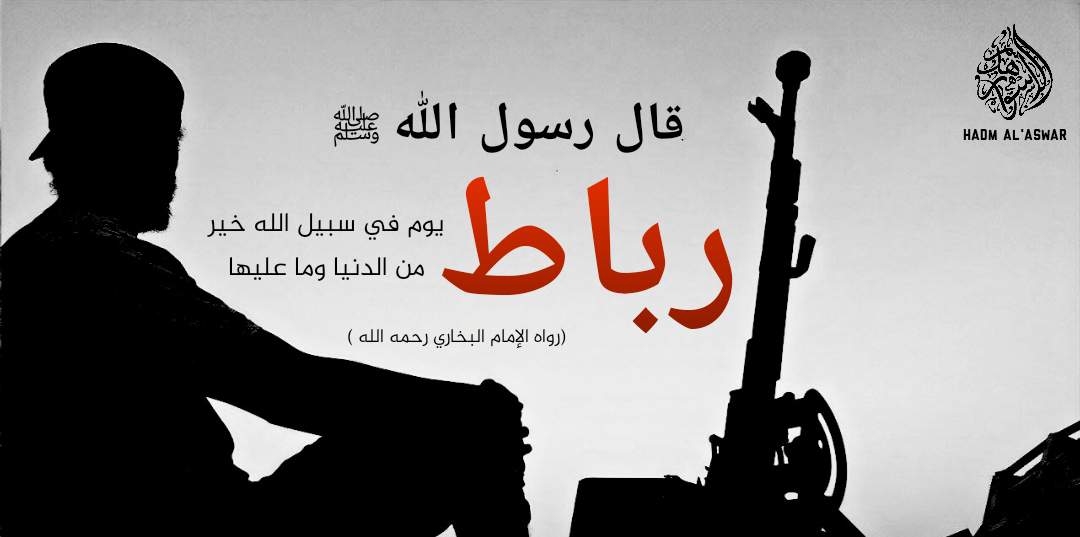

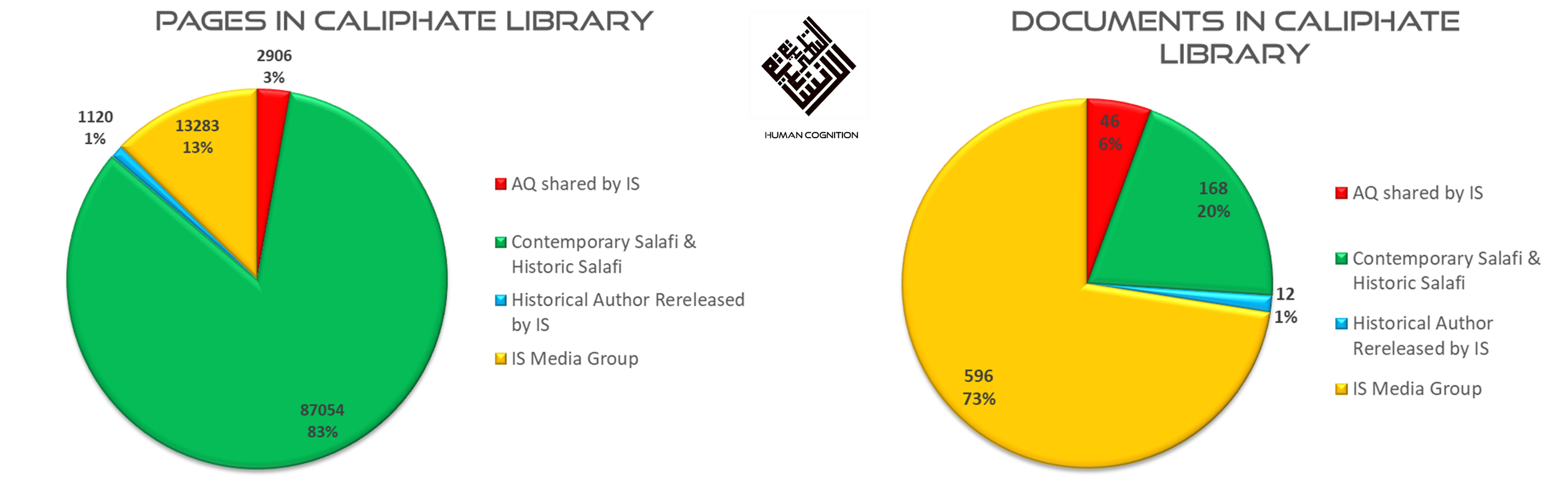


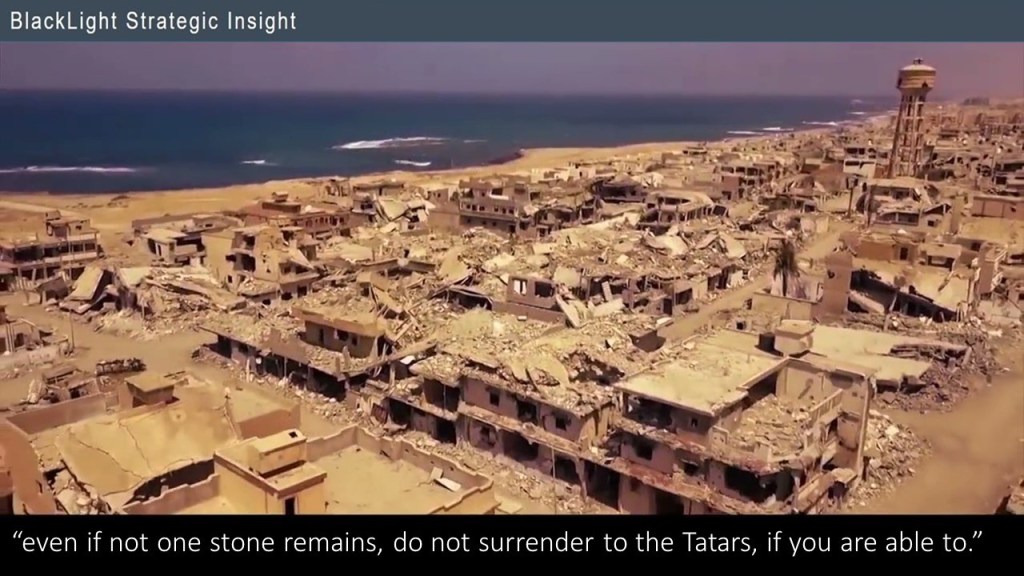


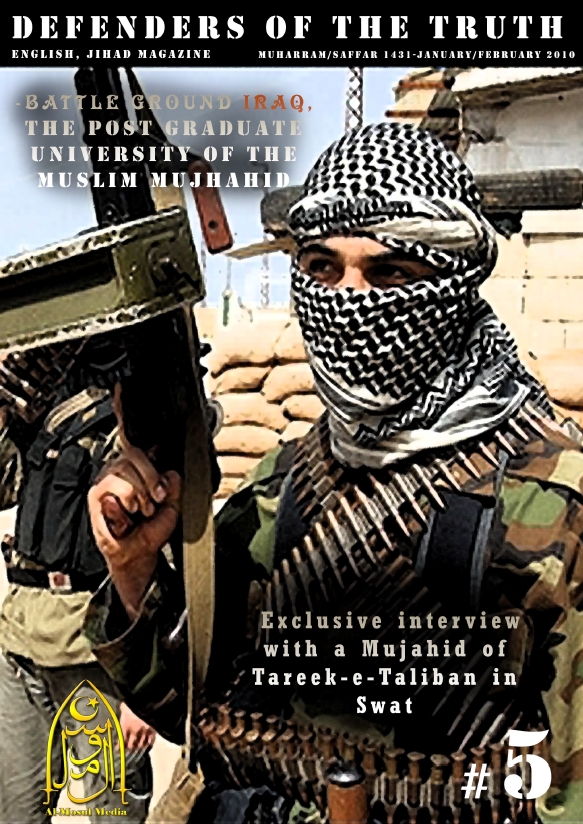
 Online Jihad: Monitoring Jihadist Online Communities